Start a Project

Request a Quote.

Resources

Architectural Lighting
Technical Guides

Practical guidance for Facade Lighting, Fixture Selection, Beam Angle & Optics, RGBW & Lighting Control and Outdoor Installation & Protection.

Latest Technical Guides

Practical technical guidance organized by architectural lighting topic.

Showing 21 guides

Waterproof Cable Connections for Outdoor LED Lighting: Installation Checklist

Outdoor Installation

Waterproof Cable Connections for Outdoor LED Lighting: Installation Checklist

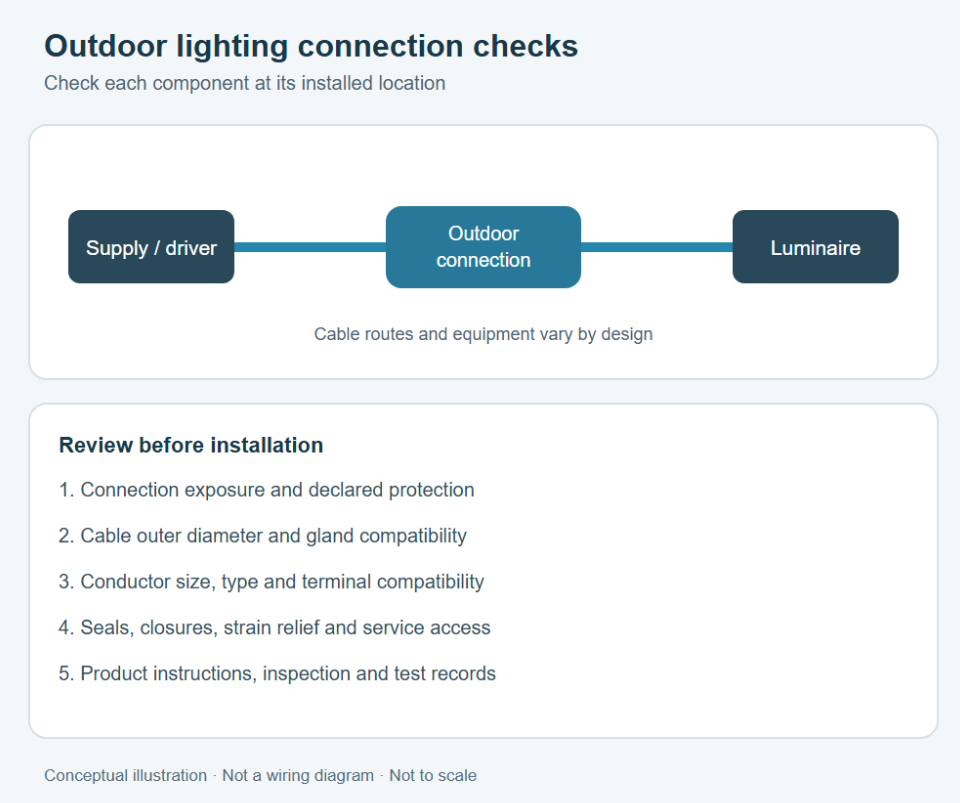
A reliable outdoor lighting connection starts with a connection system selected for its actual exposure, electrical circuit and cable. Check the connector or enclosure, seals, cable entries, cable and termination as an assembly under the manufacturer’s specified conditions. A luminaire’s IP rating does not automatically apply to a separate connector, junction box or driver enclosure. […]
Outdoor LED Wall Washer Installation: Mounting, Aiming and Wiring

Outdoor Installation

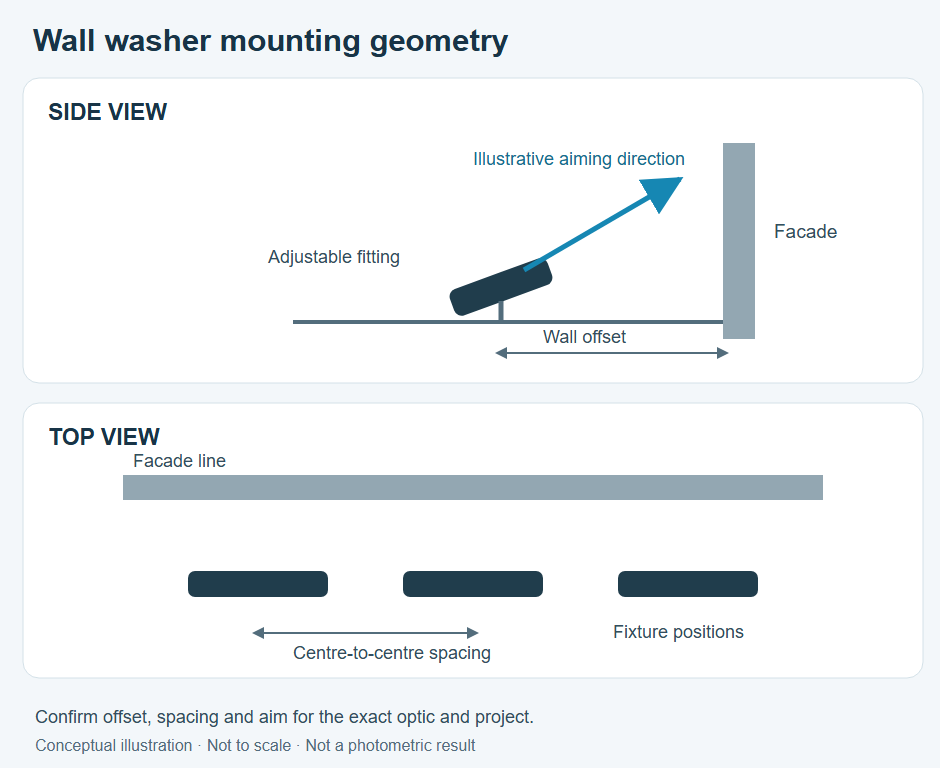
Outdoor LED Wall Washer Installation: Mounting, Aiming and Wiring

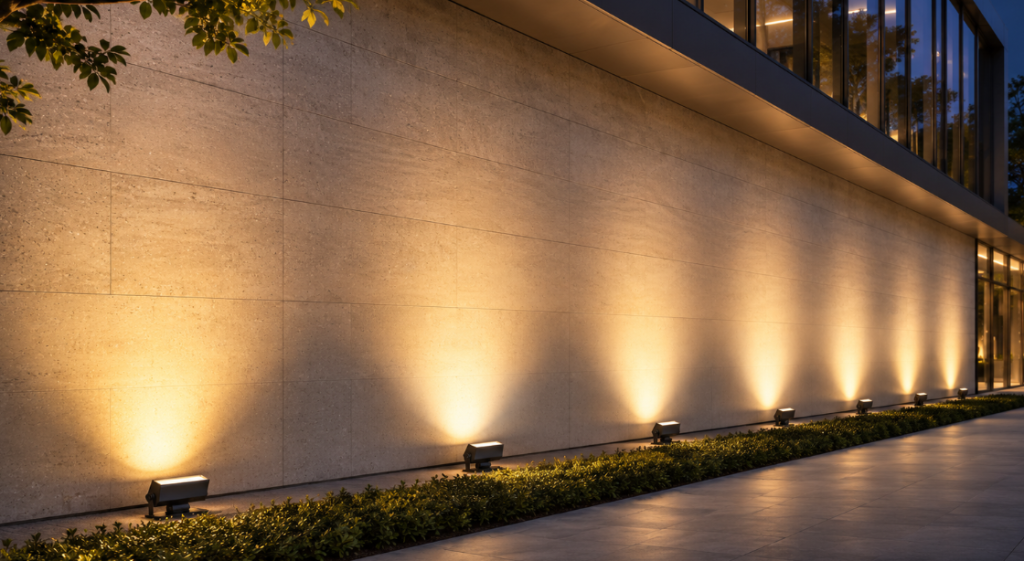
Install an outdoor LED wall washer from an approved layout that coordinates the exact luminaire and optic with the facade, mounting structure, power supply and control system. Confirm the wall offset, fixture spacing, aiming range, cable route and environmental exposure before fixing the first run. A representative mock-up and night-time review can reveal problems that […]

IP65 vs IP66 vs IP67: Which Rating Do Outdoor LED Lights Need?

Outdoor Installation

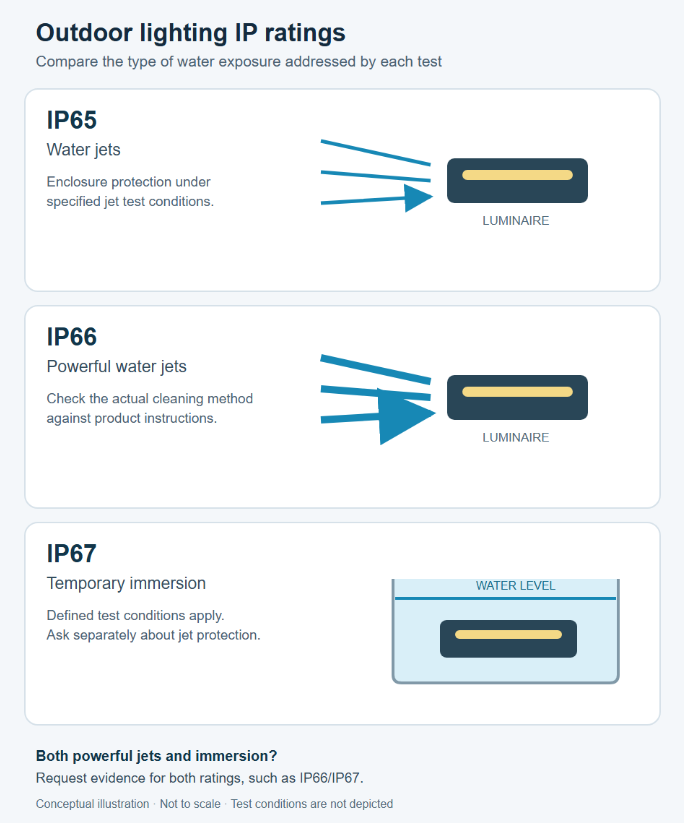
IP65 vs IP66 vs IP67: Which Rating Do Outdoor LED Lights Need?

Choose an outdoor LED light for the water exposure at its actual installation point. IP65 addresses dust and water jets, IP66 addresses dust and powerful water jets, and IP67 addresses dust and temporary immersion under specified test conditions. If a fitting can experience both powerful jets and temporary immersion, request evidence for both IP66 and […]

DMX512 vs DALI for Architectural Lighting: How to Choose

RGBW & Lighting Control

DMX512 vs DALI for Architectural Lighting: How to Choose

Choose DMX512 when a project centres on continuously changing, coordinated effects and the selected fixtures support the required control modes. Consider DALI-2 when individual device addressing, groups, scenes and compatible device information are important to the building’s lighting operation. Either can control compatible architectural luminaires, including colour-capable equipment; the right choice depends on the actual […]

RGB vs RGBW LED Lighting: What Is the Difference?

RGBW & Lighting Control

RGB vs RGBW LED Lighting: What Is the Difference?

RGB lighting combines red, green and blue emitters to create a range of colours. RGBW adds a dedicated white emitter to that colour-mixing system. For an architectural project that needs saturated colour effects, RGB may be sufficient. When the same installation must also provide a specific white appearance, an RGBW configuration is worth comparing—but its […]

What Is DMX512 Lighting Control? A Guide for Architectural Projects

RGBW & Lighting Control

What Is DMX512 Lighting Control? A Guide for Architectural Projects

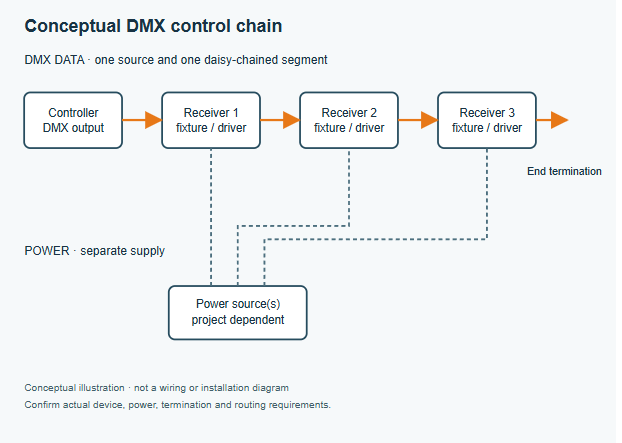
DMX512 is a digital control protocol that sends instructions from a controller to compatible lighting equipment. In an architectural project, it can be used to change parameters such as intensity and colour when the selected luminaires or their drivers support those functions. The controller, signal distribution, fixture addressing, power supplies and control scenes must be […]

How to Reduce Hot Spots and Light Spill in Facade Lighting

Beam Angle & Optics

How to Reduce Hot Spots and Light Spill in Facade Lighting

Reduce unwanted hot spots and light spill by checking where the luminaire is mounted, how it is aimed and how its complete light distribution meets the facade. Begin by identifying the exact problem area, then compare feasible changes to the optic, mounting position, aiming, spacing and compatible shielding. Verify the selected arrangement using the correct […]

How Mounting Distance and Beam Angle Affect Facade Lighting Uniformity

Beam Angle & Optics

How Mounting Distance and Beam Angle Affect Facade Lighting Uniformity

Mounting distance changes where a luminaire’s light reaches the facade; beam angle describes part of how that light is distributed. Neither determines facade lighting uniformity by itself. The installed result also depends on the complete luminous-intensity distribution, aiming orientation, spacing between luminaires, wall geometry, and the surfaces being illuminated. A wider beam or a greater […]

Symmetric vs Asymmetric Optics for Facade Lighting

Beam Angle & Optics

Symmetric vs Asymmetric Optics for Facade Lighting

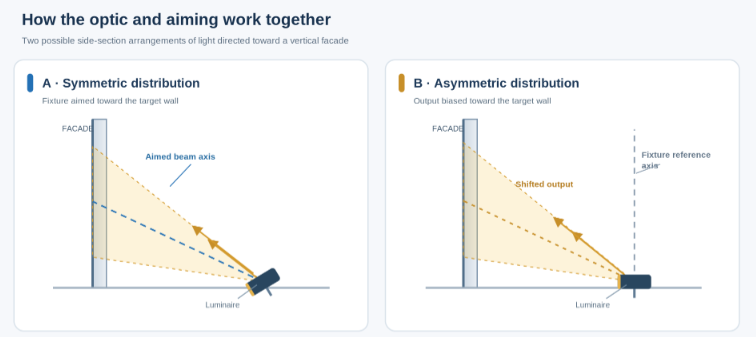
Asymmetric optics are often a strong starting point when a luminaire must direct light along a facade from a constrained mounting position. Symmetric optics remain useful when the fitting can be aimed toward a defined feature or facade zone. Neither distribution guarantees a uniform result. The better choice depends on the required appearance, wall geometry, […]

How to Calculate LED Wall Washer Spacing and Setback Distance

Beam Angle & Optics

How to Calculate LED Wall Washer Spacing and Setback Distance

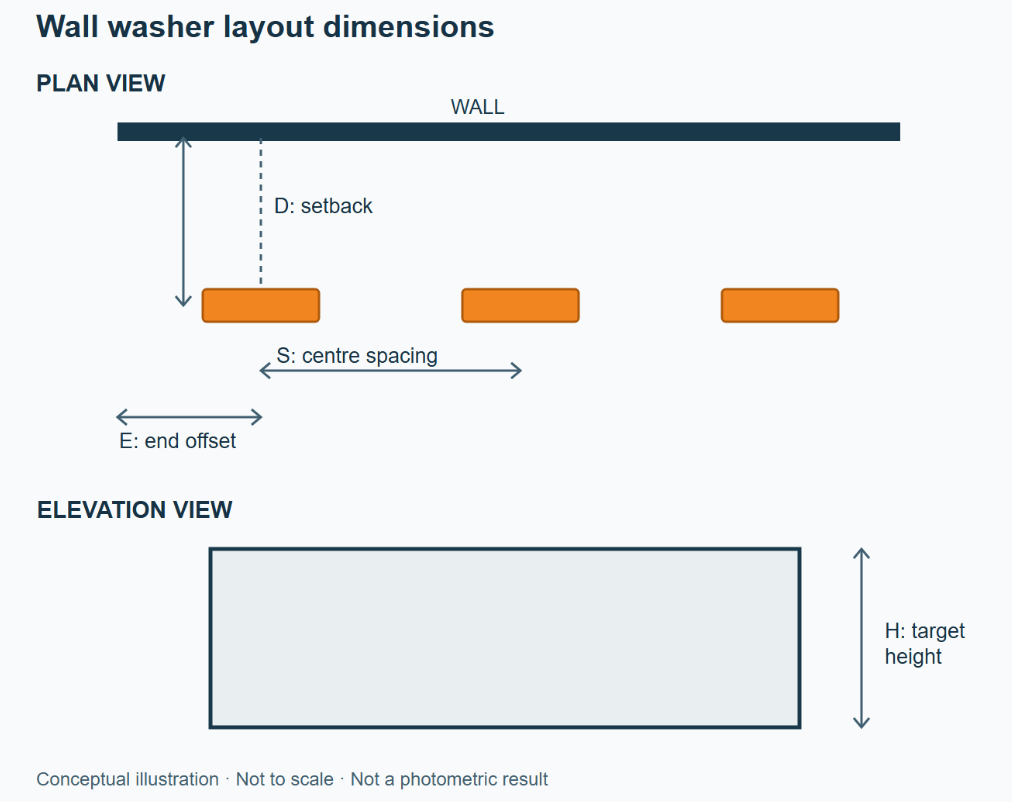
Calculate an initial LED wall washer layout from the wall dimensions, available mounting positions and the photometric distribution of the proposed fixture. Setback determines how far the fixture is from the wall; spacing determines how the fixtures are arranged along it. Adjust both together, then check the resulting illuminance and appearance with product-specific photometric data […]

Beam Angles in Architectural Lighting: How to Choose the Right Distribution

Beam Angle & Optics

Beam Angles in Architectural Lighting: How to Choose the Right Distribution

Choose a beam by matching the luminaire’s light distribution to the target’s size, the available mounting position and the desired visual effect. Start with the beam angle to estimate coverage, then check the complete photometric distribution, aiming, spill and viewing conditions. The same nominal angle can produce different results from different luminaires. For an architectural […]

IP Ratings and IK Ratings for Outdoor LED Lights: What Specifiers Need to Know

Fixture Selection

IP Ratings and IK Ratings for Outdoor LED Lights: What Specifiers Need to Know

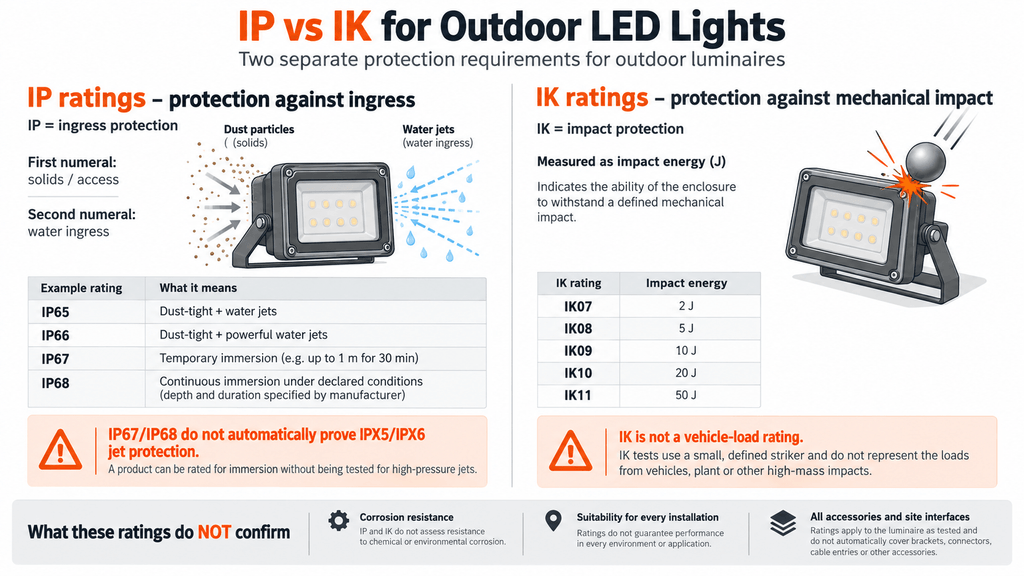
Specify an outdoor LED luminaire by matching its IP rating to the expected dust and water exposure, and its IK rating to the mechanical impacts it may encounter. Then confirm that both ratings apply to the exact enclosure, accessories and installation configuration being supplied. An IP code describes enclosure protection against access to hazardous parts, […]

How to Choose Inground LED Lights for Outdoor Projects

Fixture Selection

How to Choose Inground LED Lights for Outdoor Projects

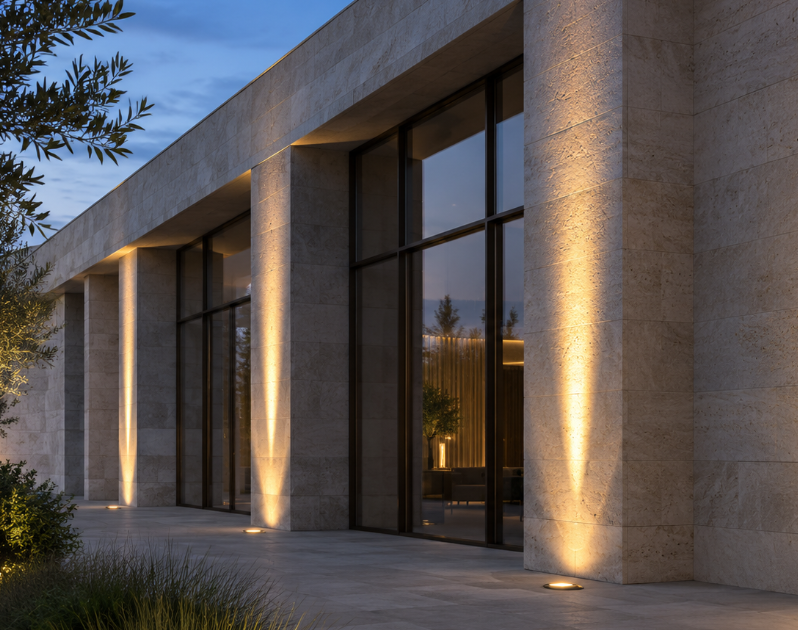
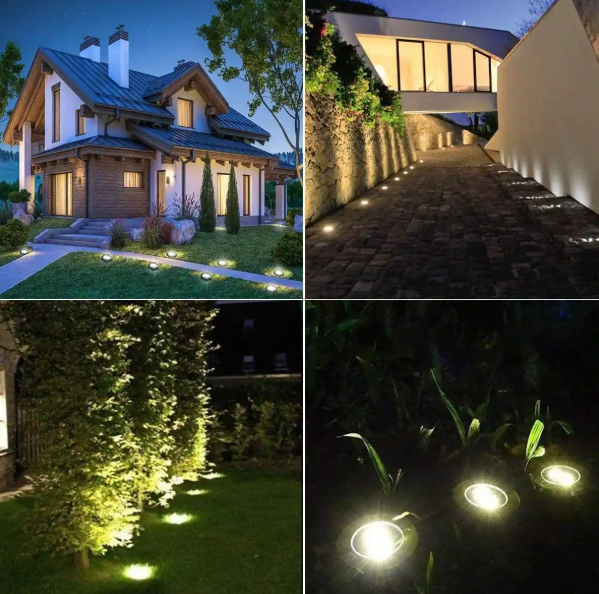
Choose inground LED lights by checking the lighting task and the installation conditions together. The right fitting must produce the required light distribution, fit the complete recess, tolerate the actual exposure and loading, and remain accessible for maintenance. A high ingress protection (IP) rating or a small housing does not establish all of those conditions. […]

High-Rise Facade Lighting: Linear Lighting Layout and Fixture Placement

Facade Lighting Design

High-Rise Facade Lighting: Linear Lighting Layout and Fixture Placement

High-rise facade lighting works best when linear fixtures follow selected architectural features and their positions are coordinated with viewing angles, facade joints, power distribution and maintenance access. Decide first whether people should see a luminous line or an illuminated building surface. These effects need different optical evidence and placement checks, even when both use long, […]

Historic Building Facade Lighting: Highlighting Materials While Protecting Heritage

Facade Lighting Design

Historic Building Facade Lighting: Highlighting Materials While Protecting Heritage

Historic building facade lighting should reveal the features that explain a building’s character while limiting physical intervention, unwanted light and changes to its setting. Begin with the building’s significance, material condition and permissible mounting locations. Then select the lighting effect and test it on a representative section before committing to equipment. The right solution may […]

How to Light a Glass Curtain Wall Facade: Reflections, Glare and Light Spill

Facade Lighting Design

How to Light a Glass Curtain Wall Facade: Reflections, Glare and Light Spill

Effective glass curtain wall lighting starts with a defined target: opaque architectural elements, interior surfaces visible through the glazing, or luminous lines integrated into the facade. For transparent vision glass, broad external illumination is often a poor starting point because light can reflect toward observers or pass into occupied rooms without creating the intended surface […]

Wall Washing vs Wall Grazing: How to Choose the Right Facade Lighting Technique

Facade Lighting Design

Wall Washing vs Wall Grazing: How to Choose the Right Facade Lighting Technique

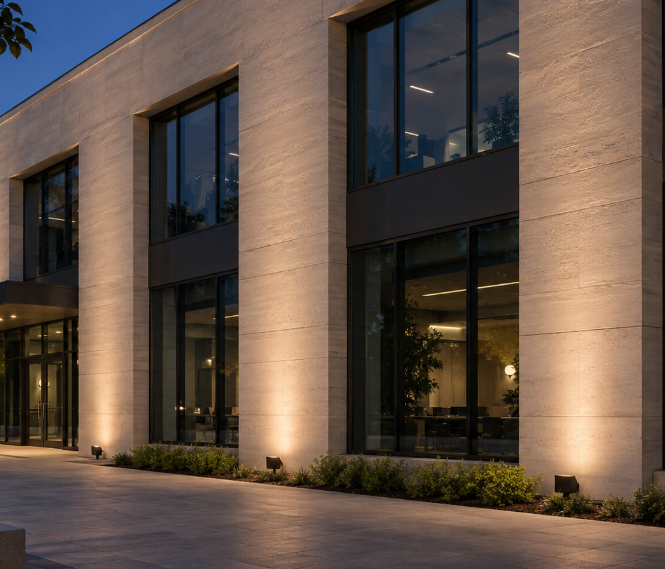
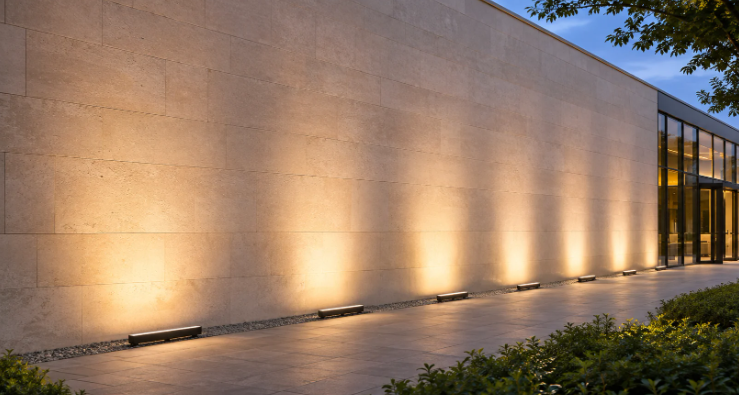
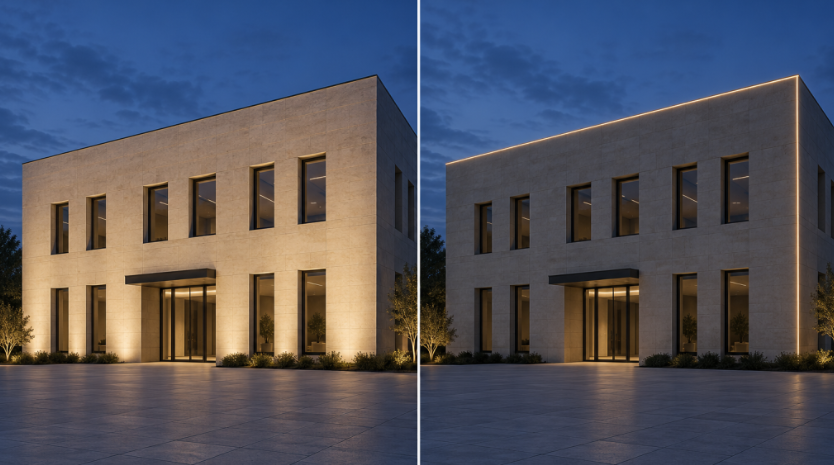
Choose wall washing when the design calls for a broadly even illuminated surface. Choose wall grazing when the intention is to reveal texture, joints or relief through light and shadow. That decision must also fit the building. A textured surface does not automatically require grazing, and a product labelled “wall washer” does not guarantee an […]

Building Facade Lighting Design: Principles, Techniques and Planning

Facade Lighting Design

Building Facade Lighting Design: Principles, Techniques and Planning

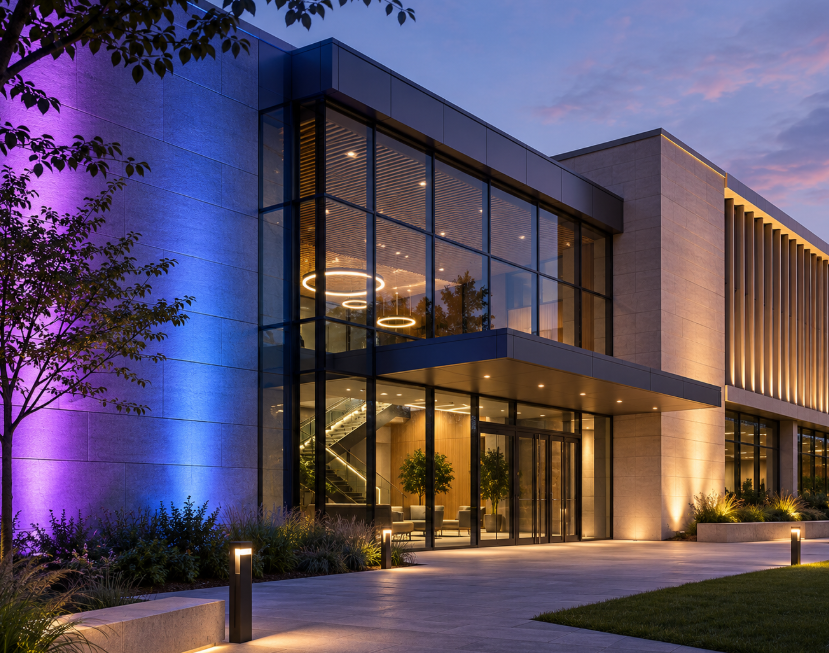
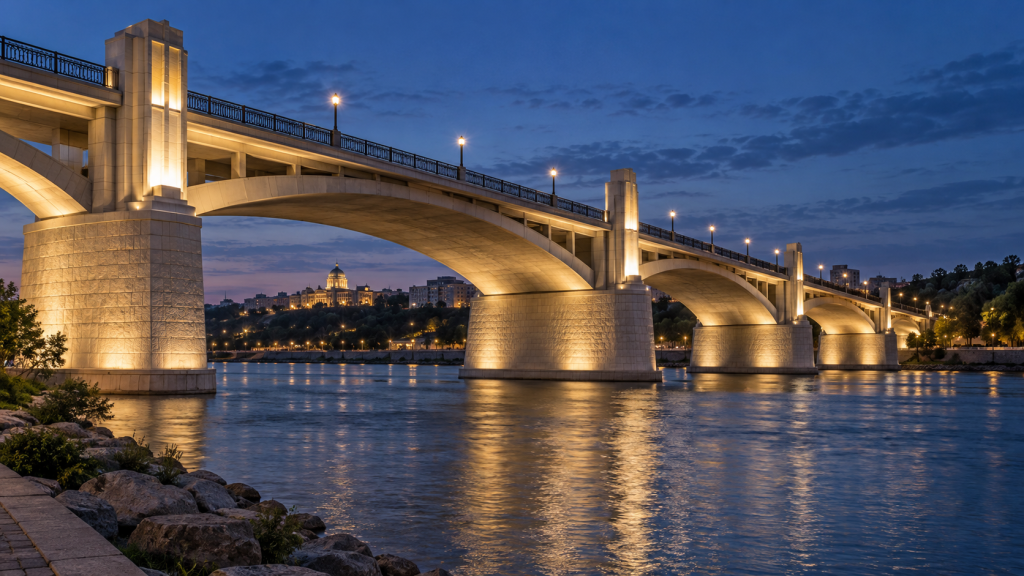
Building facade lighting design involves deciding which architectural features should be visible after dark, how they should appear, and how to achieve that result within the site’s environmental and installation constraints. A workable design connects five decisions: the intended visual effect, the facade material, the available mounting positions, the luminaire’s light distribution, and the operating […]