Start a Project

Request a Quote.

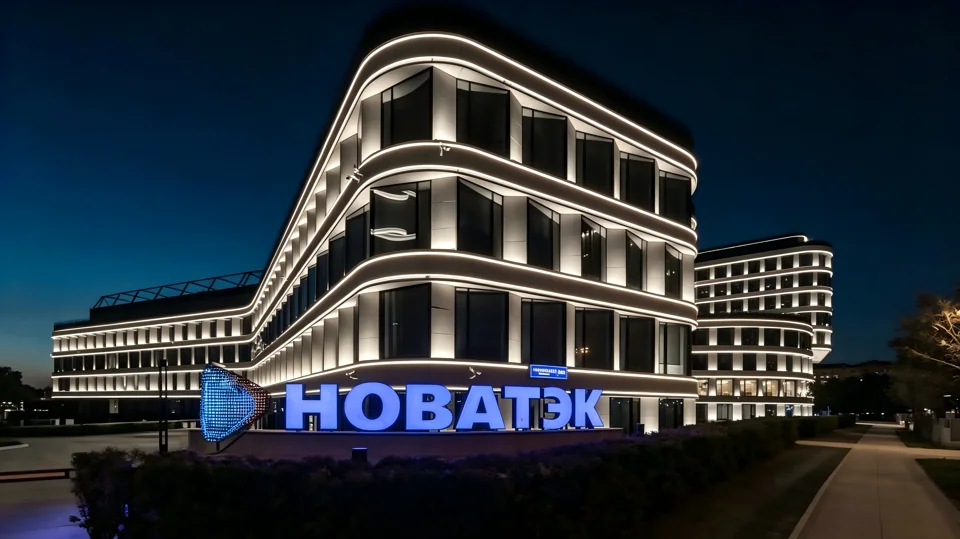
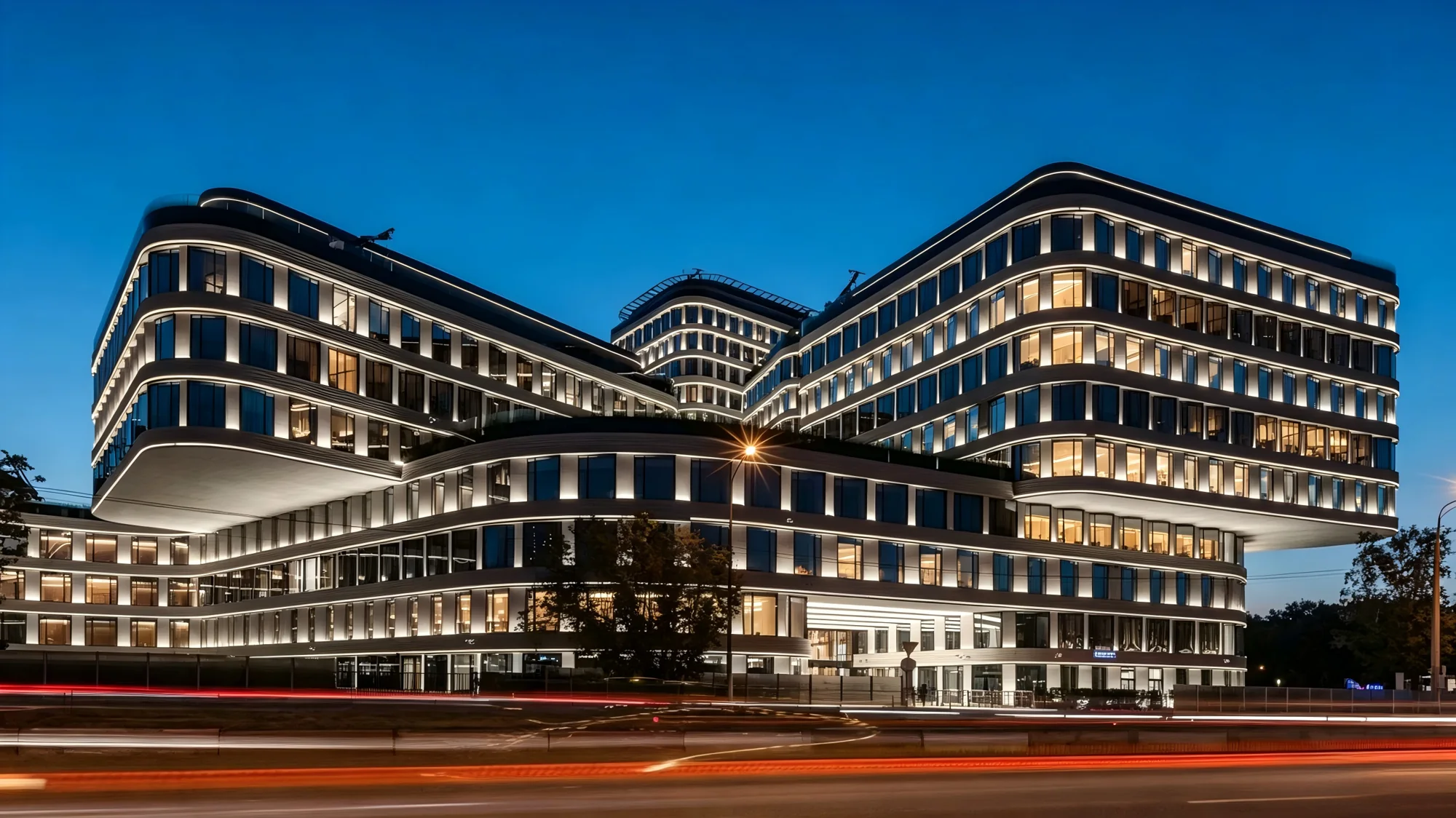
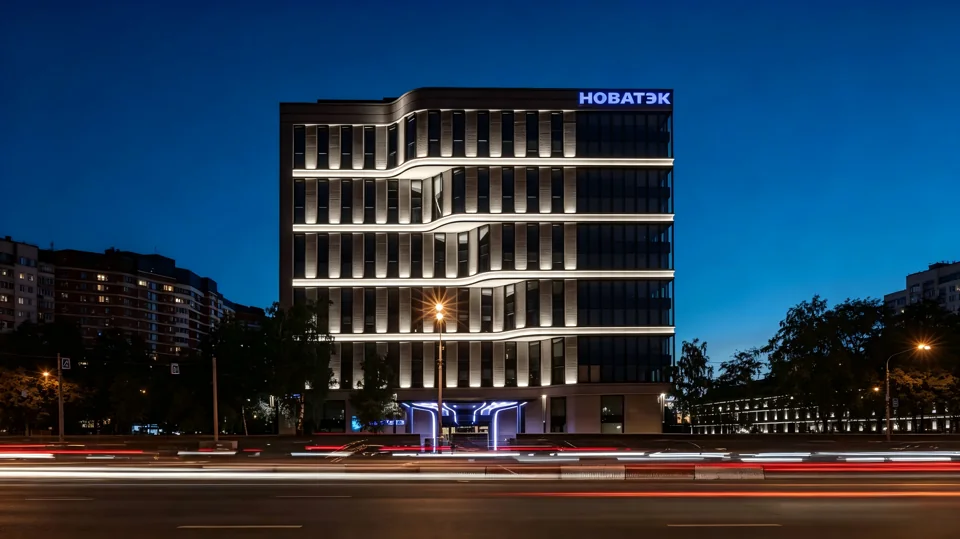
NOVATEK commercial complex with illuminated facade bands and rounded corners at dusk

ARCHITECTURAL FACADE LIGHTING

Building Facade Lighting Solutions

Choose LED fixtures around the surfaces, lines and details you want to illuminate. CRANE can review your facade drawings, help narrow product families and configurations, and identify the mounting drawings and available optical information needed for selection.

NOVATEK Commercial Complex, Russia — continuous facade lighting

START WITH THE ARCHITECTURE

Connect the Lighting Approach to the Building

Start by deciding whether people should see an illuminated surface, an accented feature or the light source itself. This distinction helps separate wall washing and accent lighting from direct-view lines and pixel patterns.

Use the facade conditions below to identify installation constraints, then compare lighting techniques and product families. The linked projects show how these choices relate to actual buildings.

FACADE CONDITIONS

Match the Lighting Detail to the Facade Geometry

Review the illuminated surface and the surrounding architecture together. Windows, recesses, joints and changes in direction can be as important as the main wall plane.

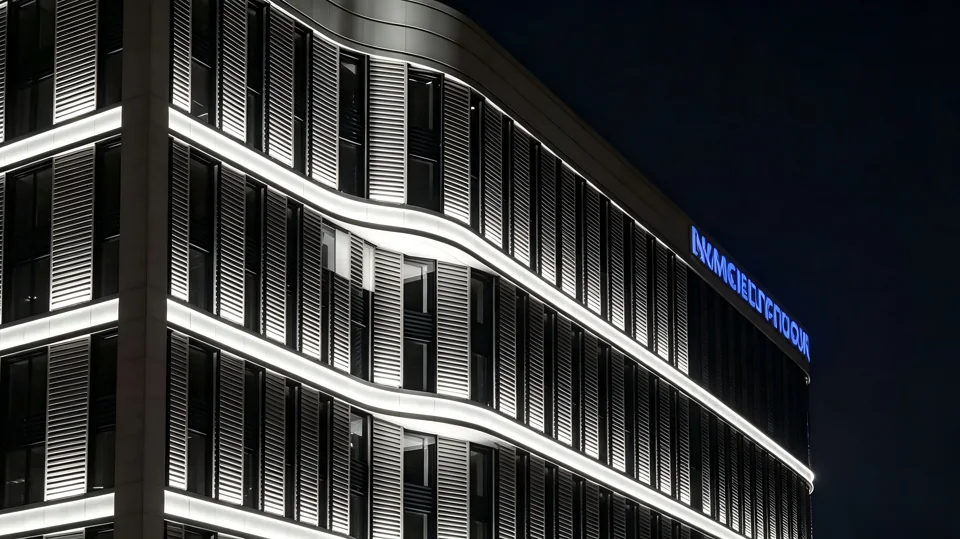
NOVATEK front elevation showing horizontal white wall-washing bands
Street-facing elevation with repeated illuminated levels and NOVATEK lettering

Floor Bands and Vertical Facade Details

Narrow floor bands and deep window recesses leave different amounts of fixing space. Establish the width of the surface to be lit and how brackets can follow corners without directing light into occupied windows.

Lighting focus
Continuity, overlap and corner transitions
Selection checks
Fixture spacing, aiming, bracket adjustment and window spill
View NOVATEK →
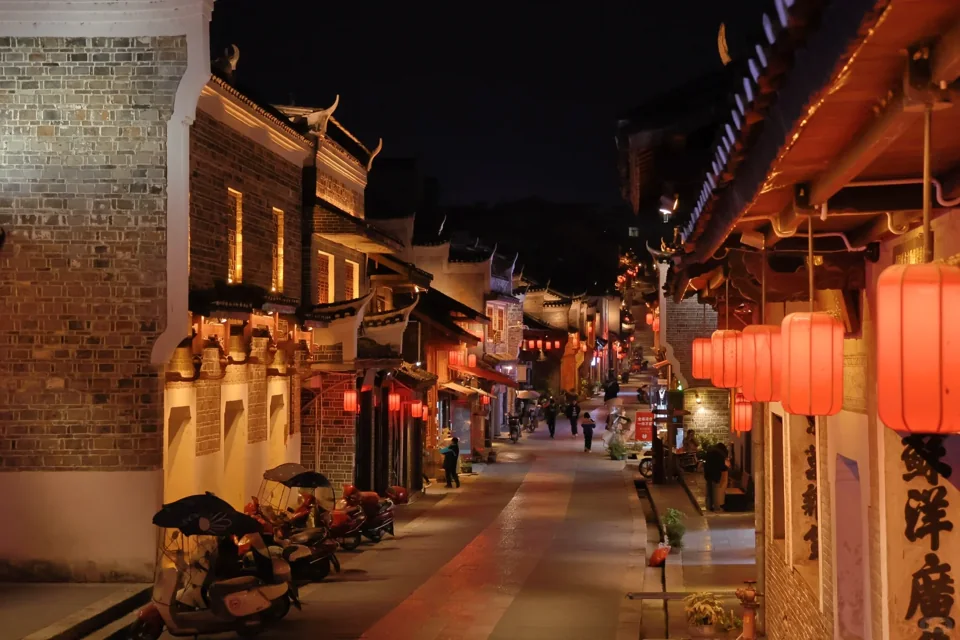
Grey-brick shopfronts, eaves and lanterns along Liping Qiaojie after dark
Liping Qiaojie — lanterns and facades along the street

Brick, Eaves and Architectural Detail

At pedestrian viewing distances, visible sources and strong shadows can dominate small details. Identify the brick texture, eave depth and permitted fixing positions before deciding which features to emphasize.

Lighting focus
Material character, eaves and recessed details
Selection checks
Source visibility, contrast, fixing positions and nearby windows
View Liping Qiaojie →
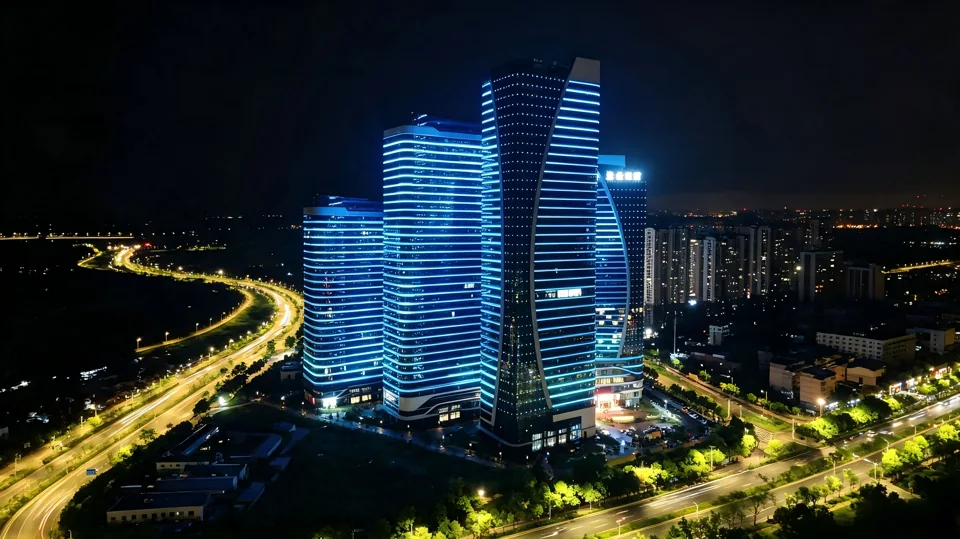
Nanning Guimin headquarters with blue-white horizontal bands across curved office towers

Glazed Towers and Horizontal Light Bands

For glazed towers, first identify solid bands, mullions and approved fixing zones. Glass reflections and views from occupied rooms affect where fixtures can sit; access for cabling and replacement also needs to follow the curtain-wall detail.

Lighting focus
Structural layers and repeated facade divisions
Selection checks
Reflections, source visibility, fixing details and service access
View Nanning Guimin Headquarters →
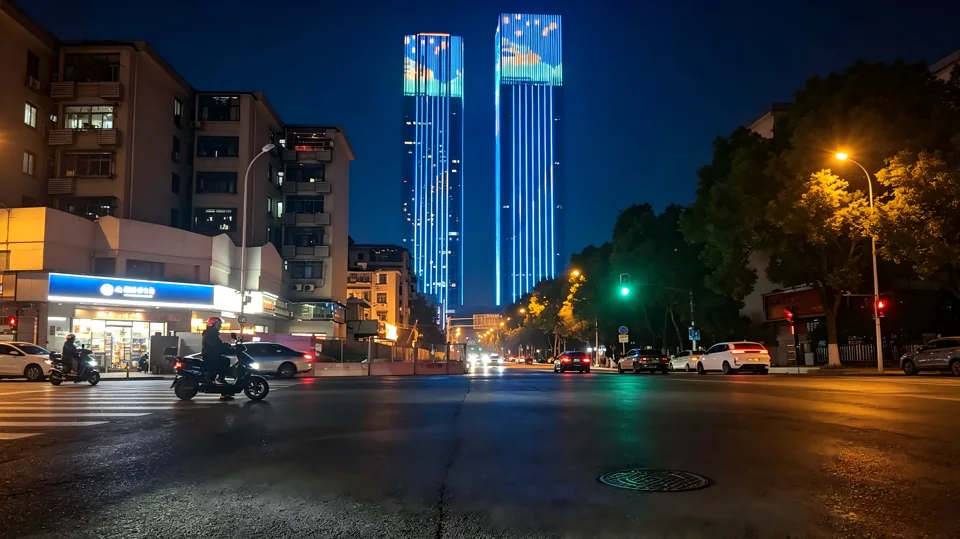
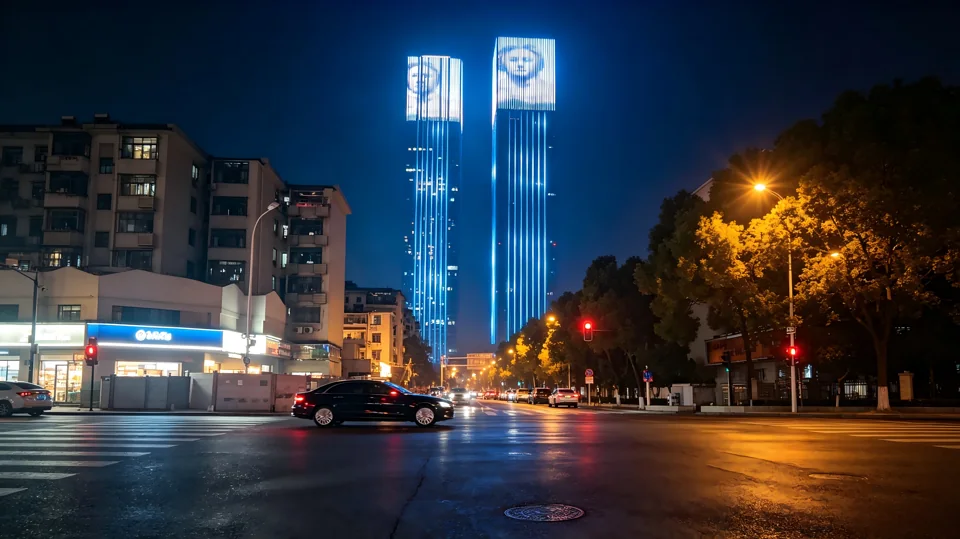
Blue LED pixel lines on the twin-tower facades above Changsha street traffic
Street-intersection view — twin-tower light lines and crown imagery

Fins, Lines and Repeated Geometry

Repeated fins and joints provide a framework for visible light lines or points. Check fin dimensions, module joints and the main viewing distances before choosing fixture lengths or pixel spacing.

Lighting focus
Vertical rhythm, line continuity and viewing distance
Selection checks
Mounting channels, point spacing, joints and maintenance access
View Jingtian Plaza →

FACADE LIGHTING TECHNIQUES

Facade Lighting Techniques and Color Control

Compare the first four approaches by the effect you want to achieve. RGBW is a color and scene-control choice that can accompany compatible fixtures across these approaches, rather than a separate way of distributing light.

NOVATEK commercial building with continuous white LED facade lighting around rounded corners
Close view of illuminated horizontal bands and vertical facade divisions

Wall Washing on Facade Bands

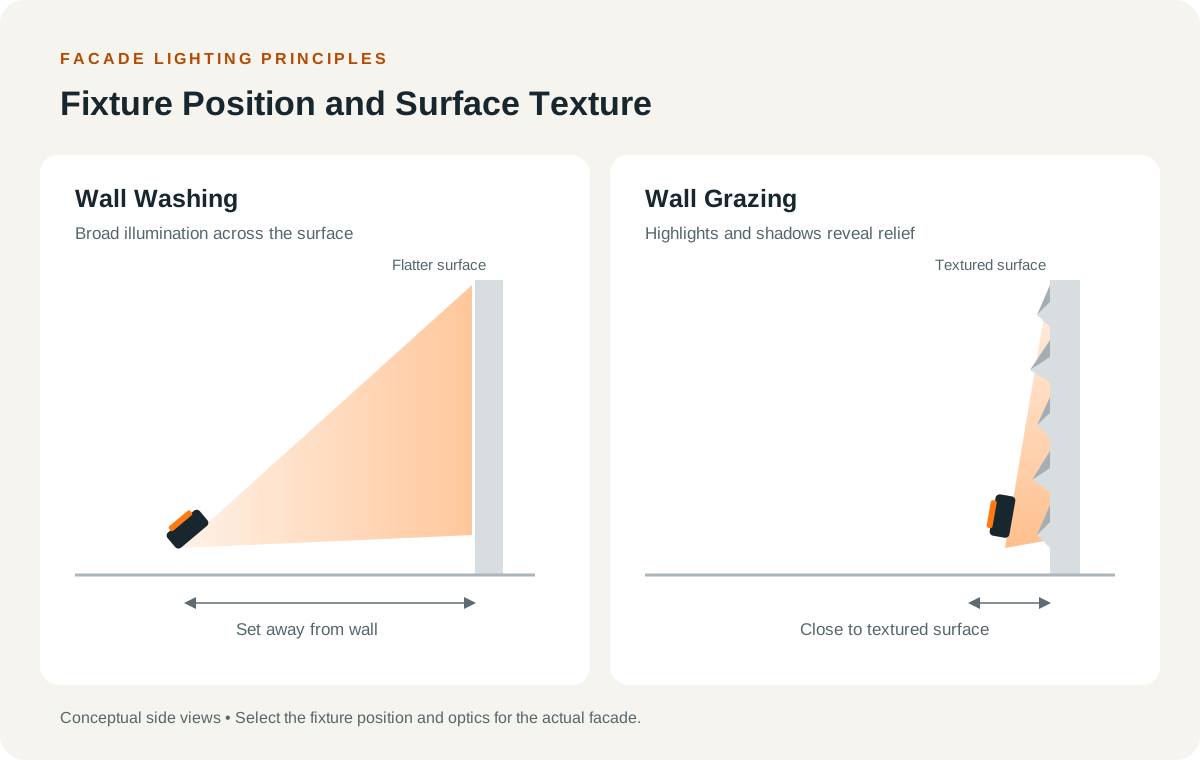
Consider wall washing when the aim is a relatively even appearance across a wall or facade band. Distribution, setback and overlap must suit the surface dimensions; check the selected configuration with applicable photometric data or a mock-up.

Design checks
Surface height, setback, spacing, aiming and spill
Building facade lighting design →
Conceptual comparison of wall washing and wall grazing showing relative fixture positions and surface texture.
Wall washing and wall grazing: relative fixture position and surface texture.

Wall Grazing

Consider grazing when brick, stone or another textured finish should stand out. Light close to the surface emphasizes relief, but can also reveal uneven joints or unwanted shadows. Assess a representative material sample before repeating the detail.

Design checks
Surface relief, light direction, setback and source shielding
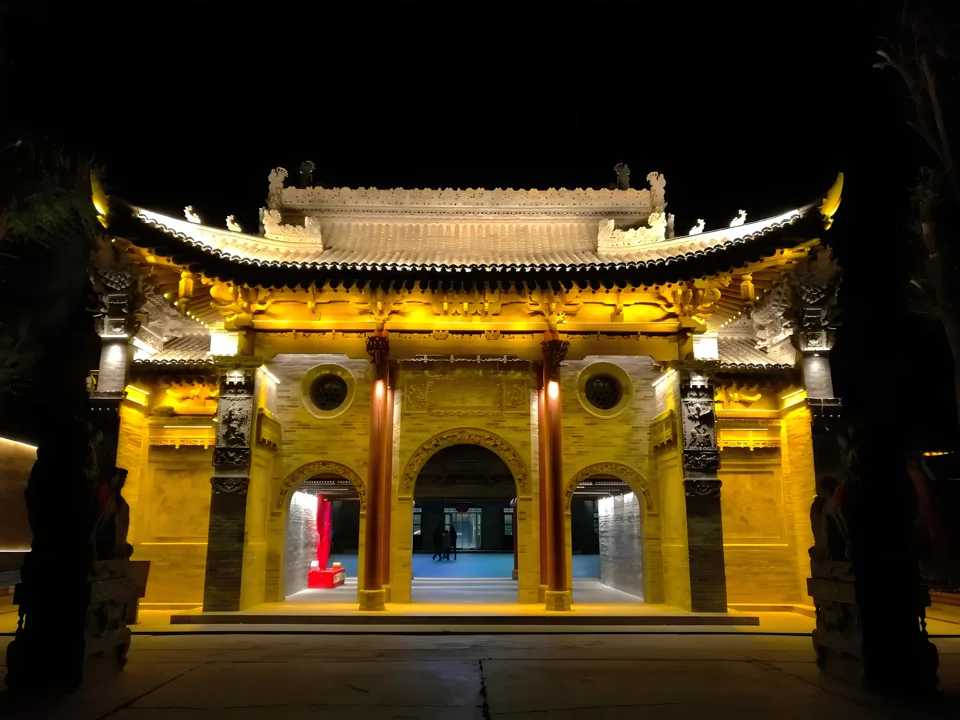
Pinganyi Town landmark gateway with multiple illuminated roof tiers and archways.

Flood and Accent Lighting

Consider flood or accent lighting when selected columns, entrances or roof details should stand out. Match the distribution to the target and mounting distance, then check aiming and shielding to limit spill beyond the feature.

Design checks
Target width, throw distance, aiming, contrast and spill
View Pinganyi Town →
Illuminated blue twin towers with crown imagery seen from the street
Twin towers after dark — vertical lines beneath illuminated crown images

Direct-View Pixel Lines and Architectural Outlines

Choose direct-view lines or pixels when the light sources should form the visible pattern. Compare a continuous line with distinct points at the intended viewing distance, then coordinate fixture lengths or point spacing with the facade grid.

Design checks
Line continuity, point spacing, mounting visibility and control layout
View Jingtian Plaza →
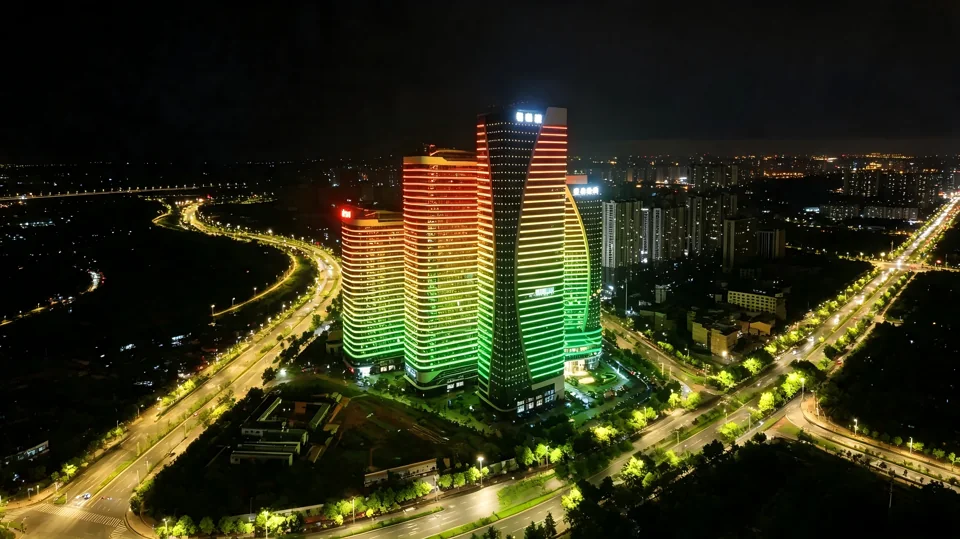
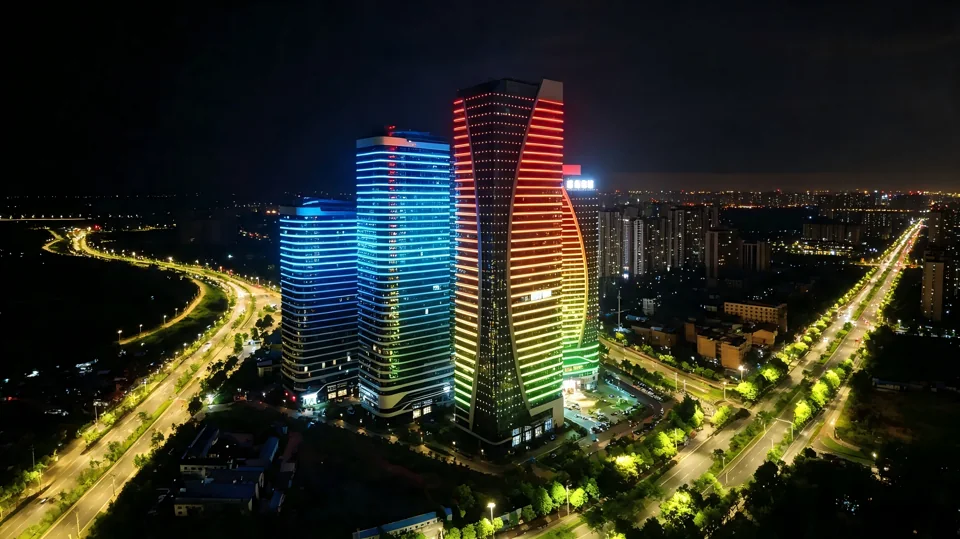
Multicolour facade lighting on the curved Guimin Investment headquarters

RGBW Facade Scenes

Consider RGBW when the brief calls for color scenes and a dedicated white channel. Define everyday and event scenes separately, then confirm compatible fixture configurations, control devices and dimming behavior. RGBW alone does not specify the control protocol.

Design checks
Color configuration, brightness zones, addressing and compatible control devices
View Nanning's color scenes →

PROJECT SELECTION CHECKS

Six Checks Before Choosing Facade Fixtures

Use these checks to turn a visual brief into a practical product discussion.

  1. 01

    Surface and Reflectance

    Identify the material, finish and illuminated area, including the windows and recesses around it.

  2. 02

    Mounting and Viewing Geometry

    Record facade heights, available fixing positions and the main close and distant views.

  3. 03

    Optics, Glare and Spill

    Select distributions for the target surface and check light escaping toward windows, roads and neighboring properties.

  4. 04

    Light Color and Contrast

    Review white or RGBW options against the actual material and the surrounding night-time environment.

  5. 05

    Scenes and Control

    Define the required lighting zones, operating scenes and compatible drivers, decoders or controllers.

  6. 06

    Outdoor Access and Maintenance

    Coordinate weather exposure, cable routes, connection points and access for cleaning or replacement.

PROJECT SUPPORT

From Facade Drawings to Fixture Selection

Share the project information you have. CRANE can help narrow product families and configurations, review mounting requirements and identify applicable drawings or available optical information. Confirm any calculations, mock-ups or additional design services separately.

  1. 01

    Review the Building

    Start with elevations, photographs, dimensions, materials and proposed fixing locations.

  2. 02

    Define the Lighting Layers

    Identify the surfaces, lines and focal details that should lead the night-time composition.

  3. 03

    Compare Fixtures and Optics

    Narrow the model and distribution using the target geometry and available mounting space.

  4. 04

    Coordinate Mounting and Control

    Review brackets, cable access, color options and the scene-control requirements together.

  5. 05

    Review the Selected Configuration

    Request the applicable drawings and available photometric information, and identify any project calculations or mock-ups needed before confirmation.

Have facade elevations, installation details or reference photographs ready?

Send Facade Project Files →

CRANE FACADE LIGHTING PROJECTS

Explore Facade Lighting in Actual Projects

Compare how different building forms lead to different lighting details, mounting arrangements and scene requirements.

NOVATEK curved corner and blue building signage at night
Rounded building corner with illuminated facade bands and NOVATEK signage

NOVATEK Commercial Complex

Location
Russia
Lighting focus
Continuous white facade bands and rounded corners
CRANE's scope
LED luminaire supply and custom mounting brackets

Rounded facade corners make fixture aiming and bracket adjustment central to the detail. CRANE supplied LED wall-washing luminaires and adjustable stainless-steel brackets for the building's continuous white lighting bands.

View the NOVATEK Project →
Red, blue and green lighting on several curved headquarters elevations

Nanning Guimin Headquarters

Location
Nanning, China
Lighting focus
Curved RGBW bands and curtain-wall pixel points
CRANE's scope
Product supply

Broad RGBW facade bands and smaller curtain-wall pixels create two distinct lighting scales. The project record describes DMX512/RDM-based operation for regular business lighting and holiday scenes.

View the Nanning Project →
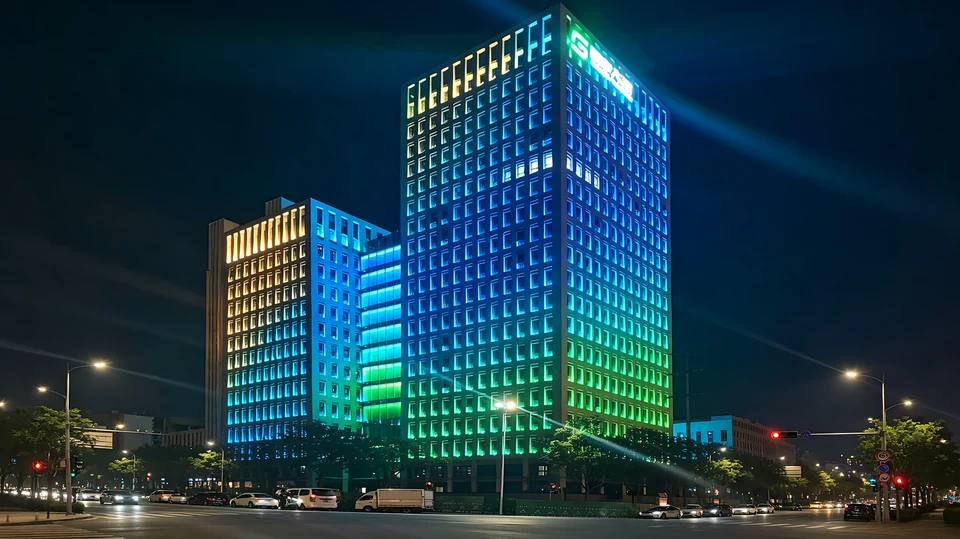
Guojin Building with blue, cyan, green and warm-toned lighting across repeated window bays

Guojin Building

Location
Jincheng, China
Lighting focus
RGBW window-sill lighting
CRANE's scope
LED product supply

Illuminated window bays form a repeated pattern across the office elevations. The project uses RGBW window-sill lights, making the window reveal the starting point for the lighting detail.

For a new window-bay layout, compare slim-width wall-washer options against the reveal dimensions and fixing space.

Explore HL Slim-Width Wall Washers →View the Guojin Building Project →

FACADE LIGHTING FAQ

Questions Before Specifying Facade Lighting

How should I start a building facade lighting brief?
Identify the surfaces and architectural lines that should remain visible after dark. Share elevations, dimensions, materials and key viewpoints, together with the preferred white-light or color effect. These inputs help narrow fixture types and mounting options.
What is the difference between wall washing and wall grazing?
Wall washing aims for broader illumination across a surface. Grazing places light close to a textured surface to emphasize relief through highlights and shadows. The appropriate fixture position depends on the actual surface and intended appearance.
How should a glazed facade be approached?
Review the solid facade bands, mullions, permitted mounting zones and reflections. Integrated lines or points can emphasize the structure, while the concept should also account for how the light is seen from inside and outside the building.
Can one fixture layout work around a curved facade?
Do not assume a straight-run layout will work unchanged around a curve. Changes in radius and setback affect overlap and aiming. Check corner brackets, fixture orientation and cable access, and verify the transition with project-specific data or a mock-up.
When should RGBW and DMX512 be considered?
RGBW describes the light-color channels; DMX512 is a control protocol. Consider RGBW for color scenes with a dedicated white channel, and confirm DMX512 support separately for the chosen fixture configuration and control devices. Plan the required zones and addressing together.
How can light spill at windows be reduced?
Review fixture position, aiming, shielding and brightness from occupied rooms as well as the street. For repeated window lighting, a sample bay can help assess the exterior pattern and the view from inside before repeating the detail.
What technical information should I request for product selection?
Ask for the selected model's dimensions, mounting drawings, electrical configuration and available photometric data. Use the actual project geometry for calculations or a mock-up where needed, especially for sensitive materials, grazing or glare conditions.
What should I send with an inquiry?
Send facade elevations, photographs, dimensions, materials, proposed mounting positions, quantities if known, and the intended lighting effect. Add color and control requirements and attach the relevant files using the inquiry form.

Discuss Your Facade Lighting Requirements

Share your elevations, facade photographs and preferred lighting effect. Include the installation location, target areas and known color or control requirements so our team can review suitable product configurations with you.

Request a Quote.