Start a Project

Request a Quote.

Resources

Beam Angle & Optics
Technical Guides

Practical guidance focused on Beam Angle & Optics for architectural lighting projects.

Latest Technical Guides

Practical technical guidance organized by architectural lighting topic.

Showing 5 guides

How to Reduce Hot Spots and Light Spill in Facade Lighting

Beam Angle & Optics

How to Reduce Hot Spots and Light Spill in Facade Lighting

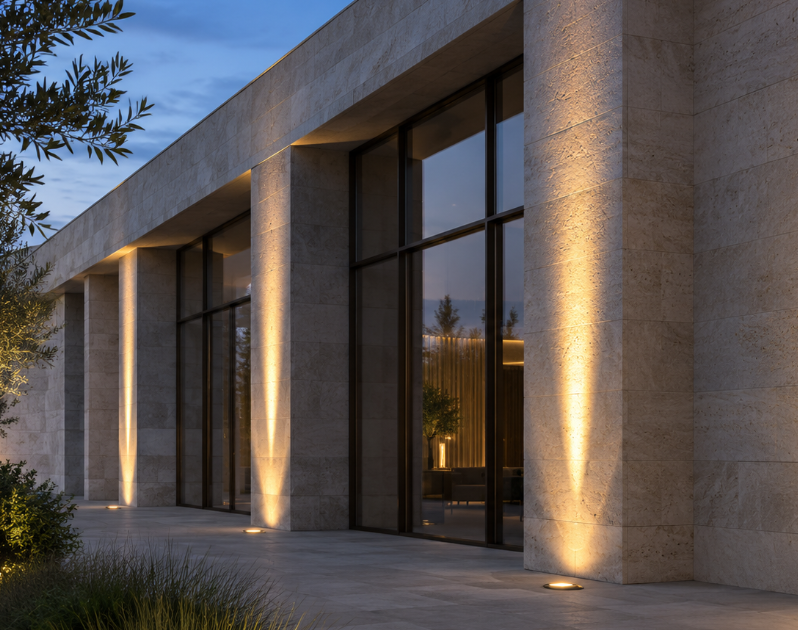
Reduce unwanted hot spots and light spill by checking where the luminaire is mounted, how it is aimed and how its complete light distribution meets the facade. Begin by identifying the exact problem area, then compare feasible changes to the optic, mounting position, aiming, spacing and compatible shielding. Verify the selected arrangement using the correct […]
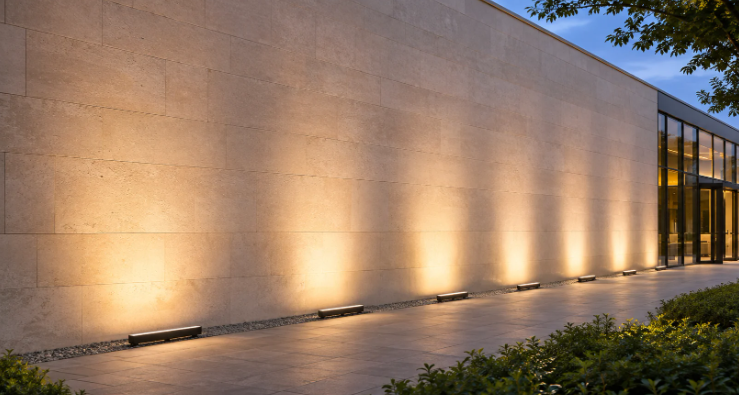
How Mounting Distance and Beam Angle Affect Facade Lighting Uniformity

Beam Angle & Optics

How Mounting Distance and Beam Angle Affect Facade Lighting Uniformity

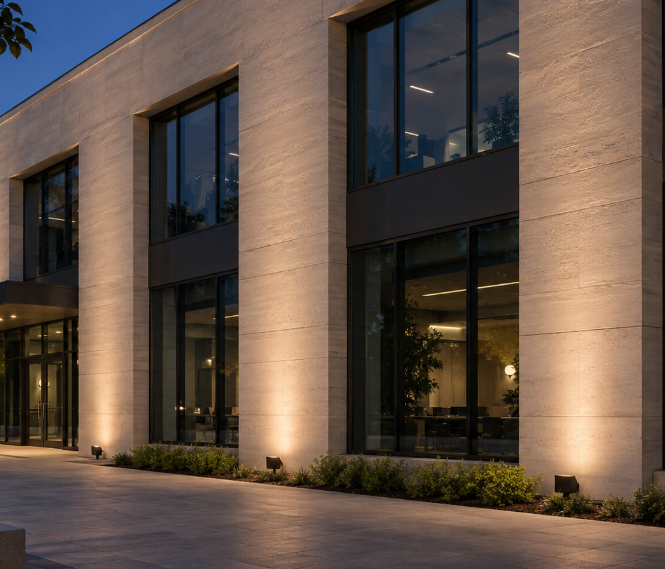
Mounting distance changes where a luminaire’s light reaches the facade; beam angle describes part of how that light is distributed. Neither determines facade lighting uniformity by itself. The installed result also depends on the complete luminous-intensity distribution, aiming orientation, spacing between luminaires, wall geometry, and the surfaces being illuminated. A wider beam or a greater […]

Symmetric vs Asymmetric Optics for Facade Lighting

Beam Angle & Optics

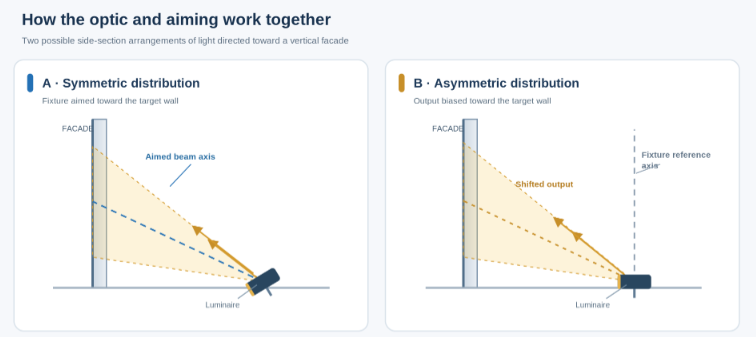
Symmetric vs Asymmetric Optics for Facade Lighting

Asymmetric optics are often a strong starting point when a luminaire must direct light along a facade from a constrained mounting position. Symmetric optics remain useful when the fitting can be aimed toward a defined feature or facade zone. Neither distribution guarantees a uniform result. The better choice depends on the required appearance, wall geometry, […]

How to Calculate LED Wall Washer Spacing and Setback Distance

Beam Angle & Optics

How to Calculate LED Wall Washer Spacing and Setback Distance

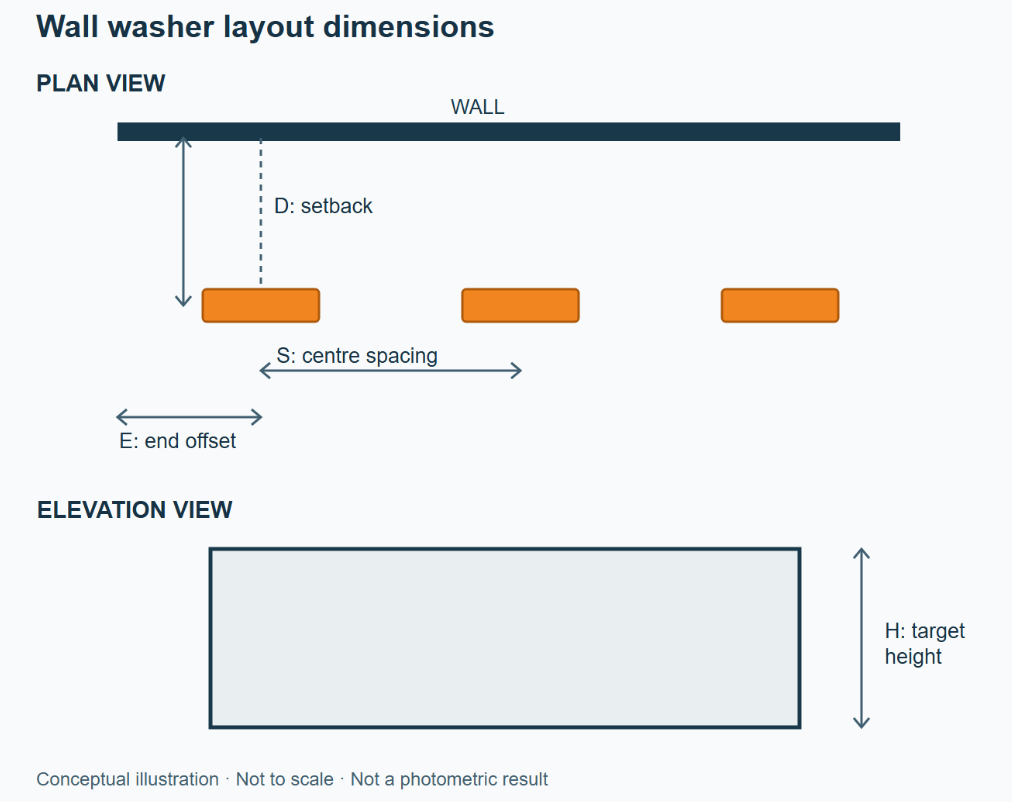
Calculate an initial LED wall washer layout from the wall dimensions, available mounting positions and the photometric distribution of the proposed fixture. Setback determines how far the fixture is from the wall; spacing determines how the fixtures are arranged along it. Adjust both together, then check the resulting illuminance and appearance with product-specific photometric data […]

Beam Angles in Architectural Lighting: How to Choose the Right Distribution

Beam Angle & Optics

Beam Angles in Architectural Lighting: How to Choose the Right Distribution

Choose a beam by matching the luminaire’s light distribution to the target’s size, the available mounting position and the desired visual effect. Start with the beam angle to estimate coverage, then check the complete photometric distribution, aiming, spill and viewing conditions. The same nominal angle can produce different results from different luminaires. For an architectural […]