Cultural building facade lighting · Changsha, China
Changsha Theatre and Art Centre Facade Lighting Project
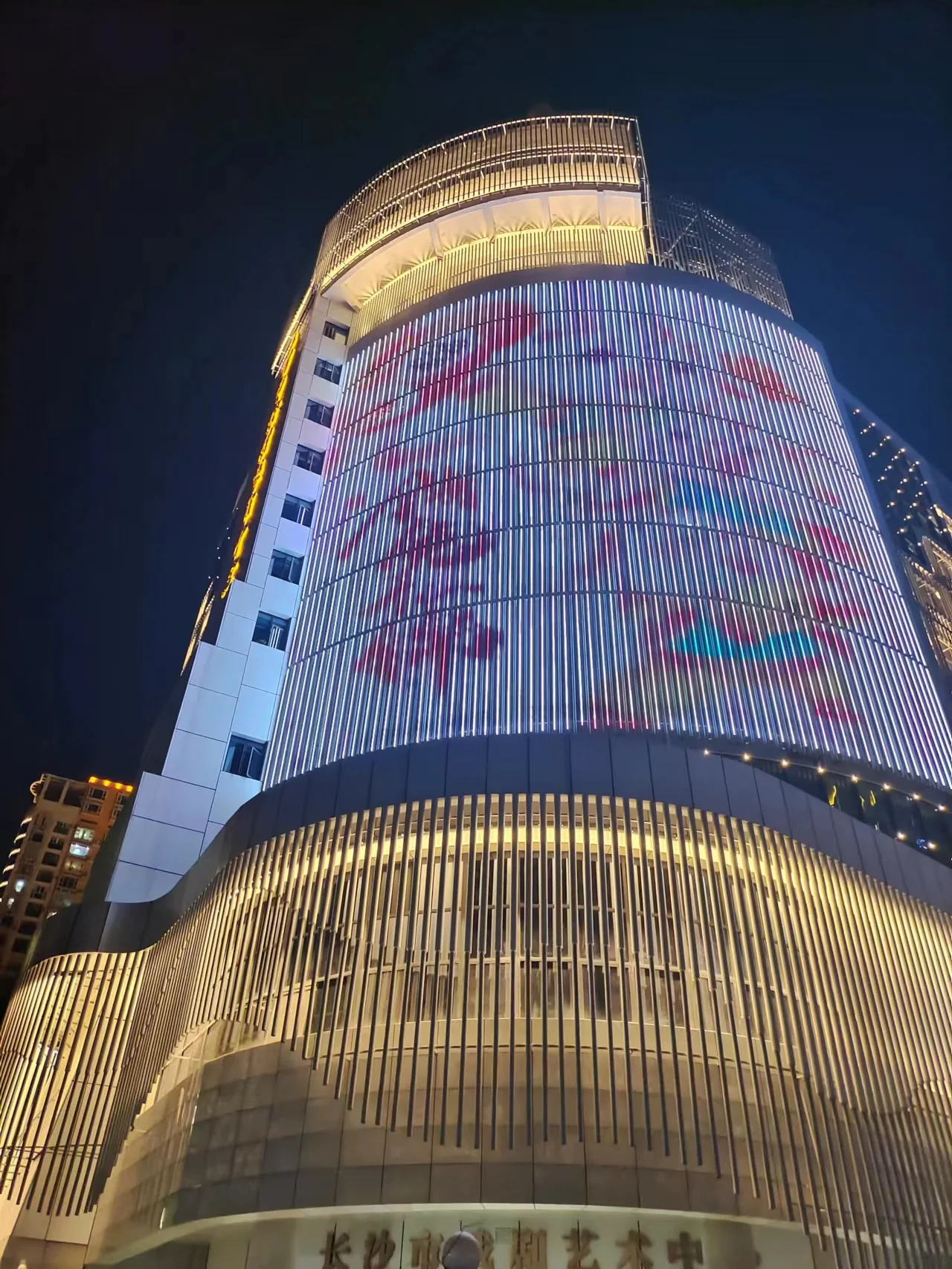
Programmed LED lighting creates moving patterns across the theatre’s curved exterior. Linear accents keep its architectural outline visible after dark.
Animated LED Lighting Across a Curved Theatre Facade
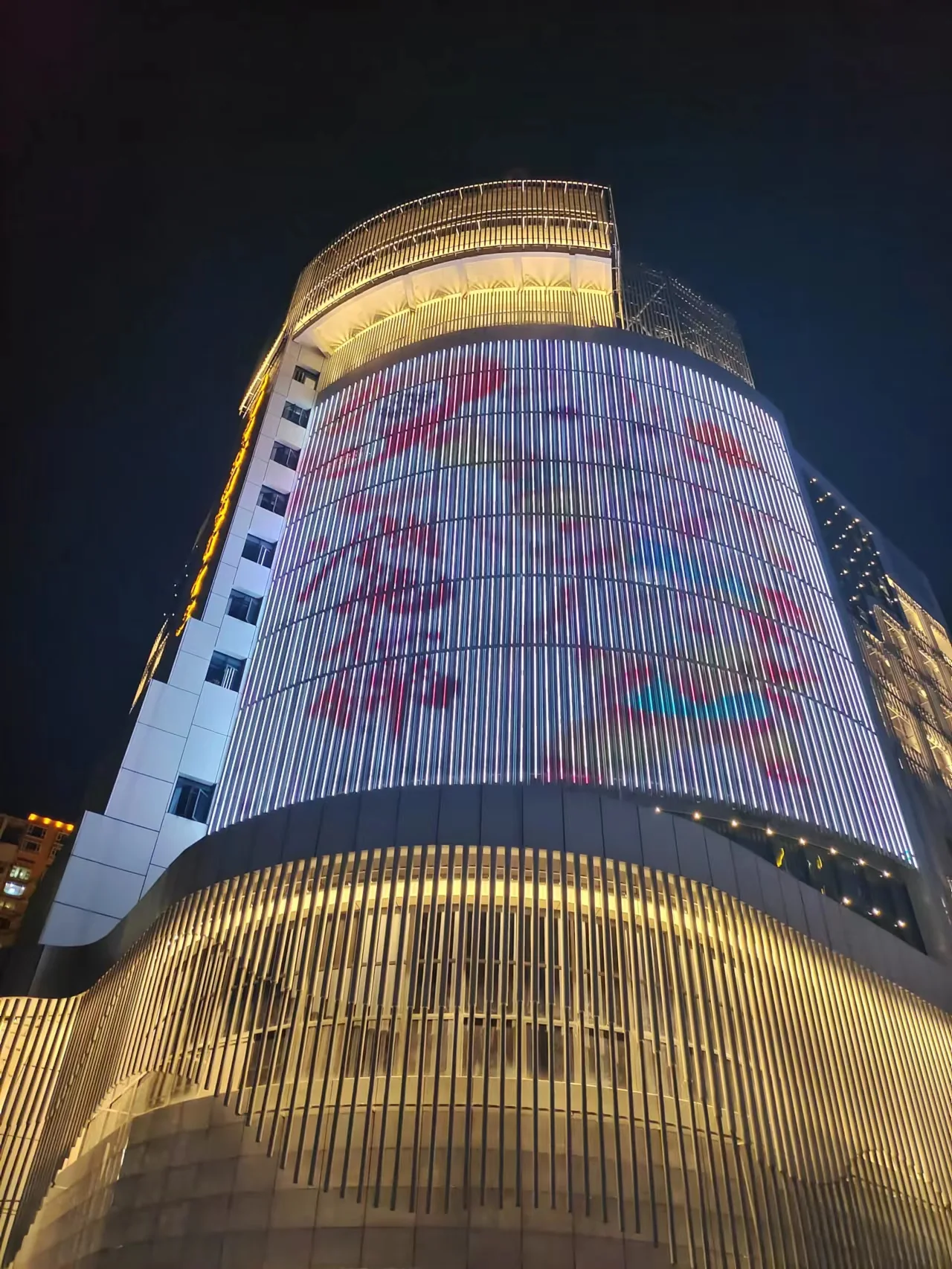
Changing graphic patterns run across the theatre’s broad curved frontage. Closely spaced LED lines form a media-like surface, while linear accents mark the upper edges of the building.
Individual lighting lines remain visible at close range. From farther away, they combine into a continuous graphic pattern. The curved layout must preserve that effect without obscuring the building’s outline.
↗Changsha Theatre and Art Centre — illuminated patterns across the curved frontage
Design analysis
Curved LED Facade: Fixture Layout, Media Effects and DMX512 Control
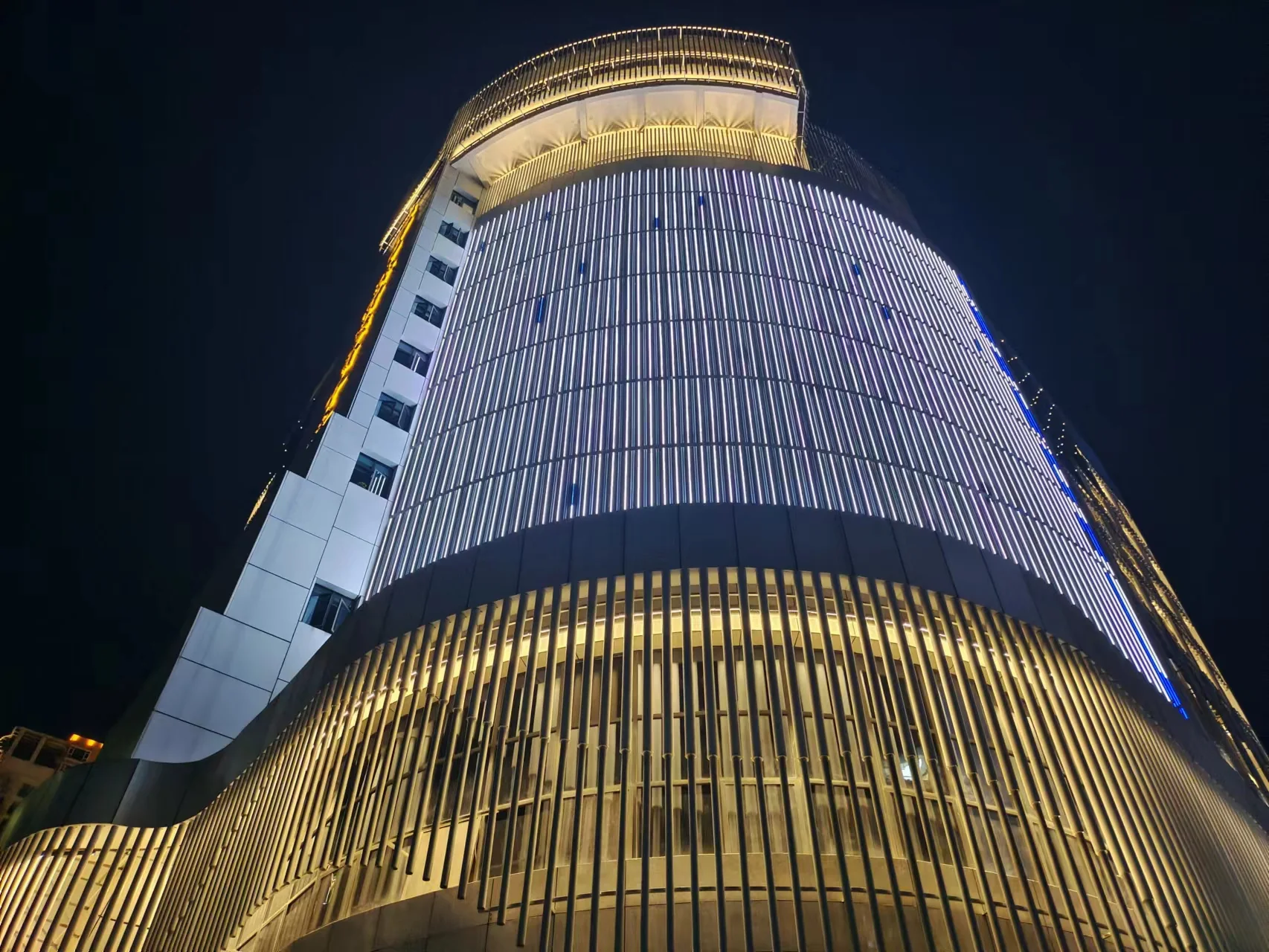
↗Changsha Theatre and Art Centre — facade lighting detail viewed from below
Fixture Spacing and Viewing Angles
On a curved facade, the spacing between illuminated lines appears different as the viewing angle changes. Fixture positions should follow the building grid and be checked from the main viewing points. The final layout must also allow for fixing details, cable access and maintenance.
Animated Facade and Roofline Accents
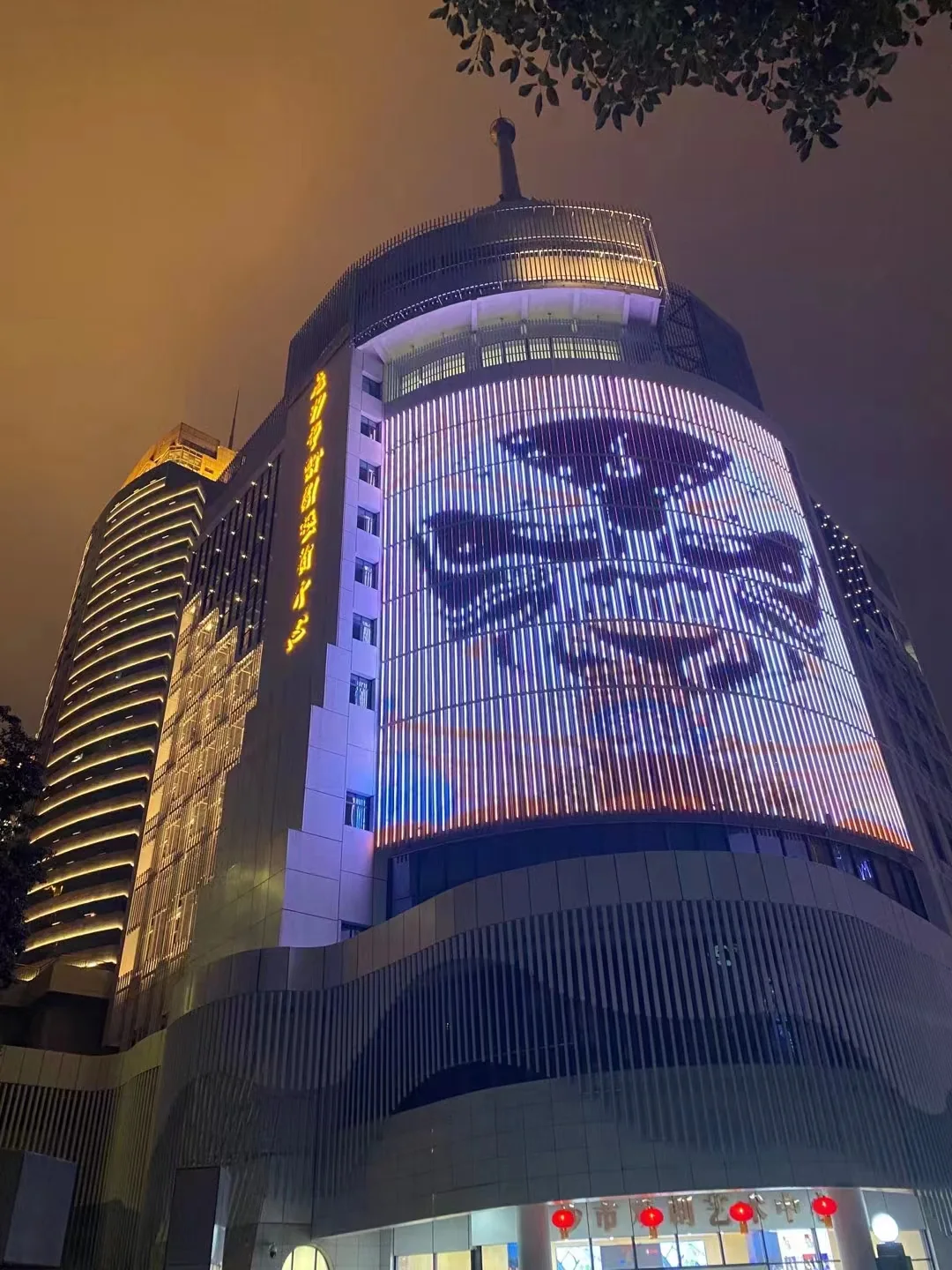
The moving patterns provide the main visual content. Roofline lighting serves a different purpose: it keeps the building’s silhouette legible as the facade scenes change. The two layers need balanced brightness and color, so neither distracts from the other.
DMX512 Addressing and Scene Playback
DMX512 is the control protocol used on this project. Compatible fixtures or controllable segments receive channel addresses for functions such as dimming and RGB color. For graphic scenes, programmed lighting positions must correspond to the actual fixture layout. Address allocation, signal distribution and synchronized playback are planned together to keep the effects consistent across the curve.
Design considerations for curved LED facades with programmed lighting effects.
Photos & film
Changsha Theatre Facade Lighting Photos & Video
View the lighting sequence in the project film, followed by night photographs taken from different street-level angles.
Changsha Theatre and Art Centre – Exterior Facade Lighting Video
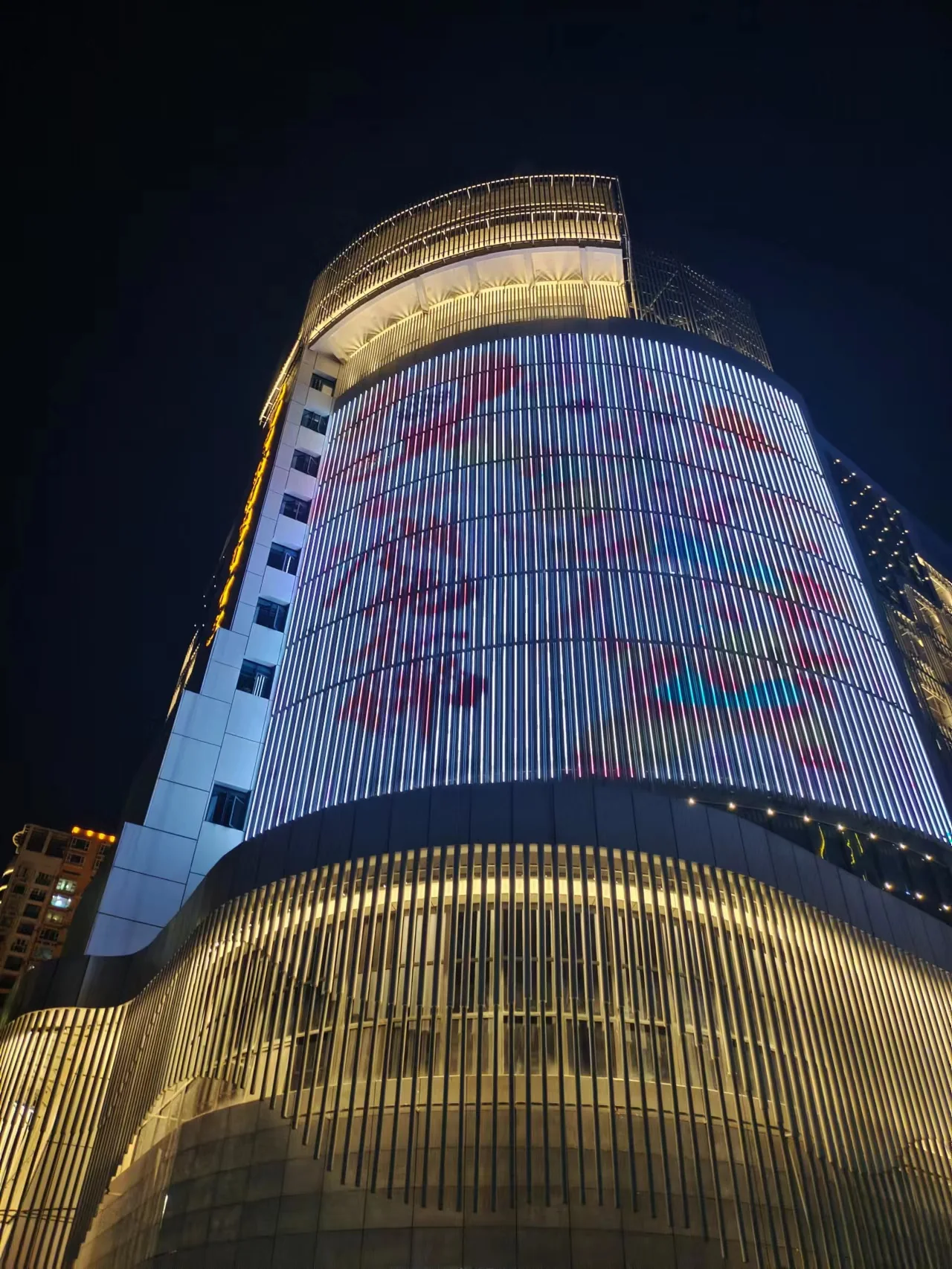
↗Changsha Theatre and Art Centre — street-level view of facade patterns and building edges↗Changsha Theatre and Art Centre — curved frontage and roofline from another street-level view
Project views
Lighting at Two Viewing Scales
The film captures changes in color and timing; still photographs make it easier to inspect the line alignment and transitions near the roofline.
Products used
LED Linear Luminaires Used in the Project
CAL-XC24-I-M1-C1
XC Curtain Wall
Curtain-wall lighting lines
XC Curtain Wall follows repeated lines along the curved frontage. Its integrated cable channel helps organize wiring within the installation profile. DMX512 dimming, RGB/RGBW and controllable-segment options can be configured to suit the required lighting zones.
TM Acrylic Cover provides a defined luminous line along roofline sections and architectural edges. Its 1,000 mm profile and thickened acrylic cover suit repeated linear runs. Project-specific DMX512 control can coordinate these accents with the main facade scenes.
Practical questions about control, fixture selection and project planning.
Can DMX512 control individual LED pixels?
Yes, when the fixture or decoder provides independently addressable pixels or segments. DMX512 carries control-channel values; pixel resolution depends on the luminaire design and channel mode.
How many fixtures can one DMX512 universe control?
One DMX512 universe provides up to 512 control slots, not 512 fixtures. A basic RGB fixture commonly uses three channels, while RGBW and segmented fixtures may require more.
Can XC and TM linear lights be customized for DMX512?
Yes. CRANE offers project-specific dimming, RGB/RGBW and segmented-control configurations. The required channel mode, wiring and controller compatibility are confirmed before production.
What determines pixel spacing on a curved media facade?
Start with the viewing distance and the detail required in the graphics. Closer spacing supports finer patterns; wider spacing may suit broad color effects. Facade curvature also affects the apparent spacing.
What information is needed for a similar project quotation?
Send facade elevations, dimensions, target lighting effects, viewing distances, mounting details and the planned controller location. These help define fixture quantities, DMX512 addressing and power and signal routes.
Start with your project
Planning a Similar Facade Lighting Project?
Share your facade drawings, intended effects and installation conditions. CRANE can review suitable luminaires, DMX512 channel allocation and control layouts for your project.