CURVED PEDESTRIAN BRIDGE LIGHTING · CHENGDU, CHINA
Chengdu Tianfu 2nd Street Pedestrian Bridge Lighting Project
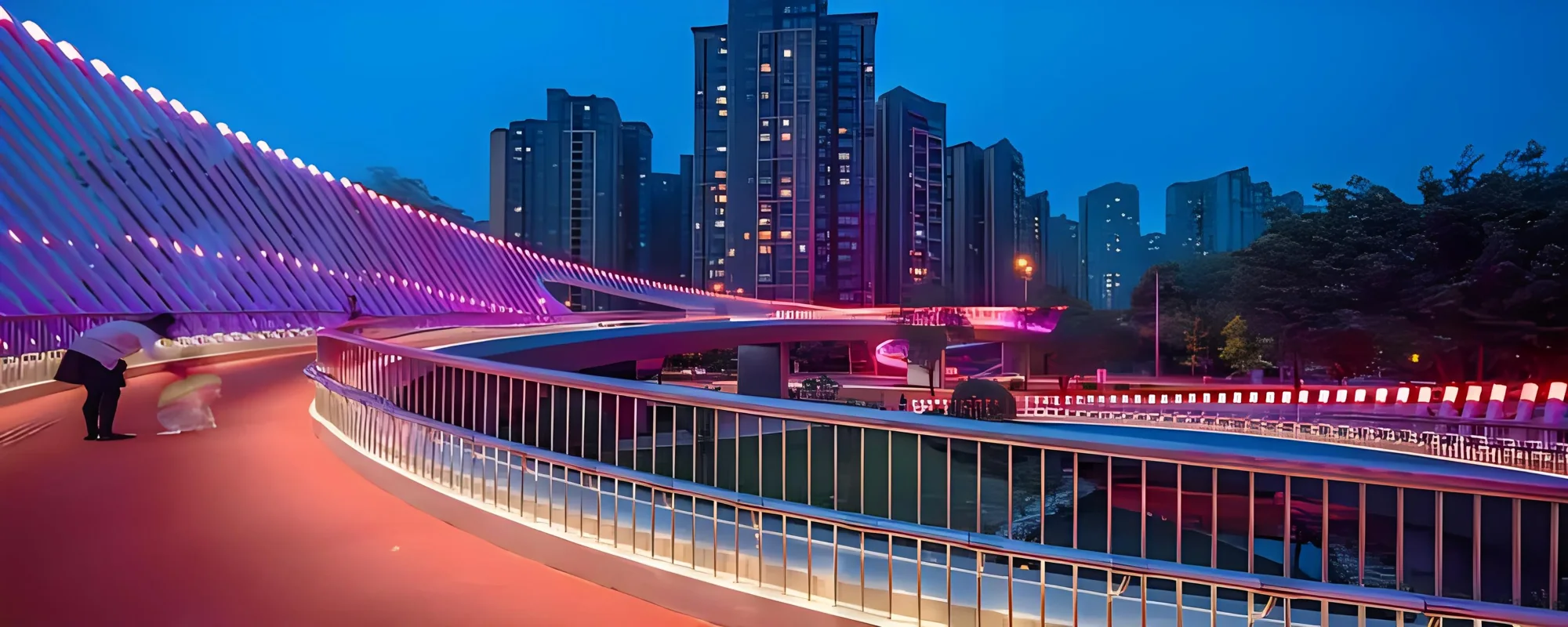
The looping footbridge at Chengdu Tianfu 2nd Street is traced by illuminated edges and repeated railing accents. Pink-white lighting defines its curved profile, while warmer light marks the pedestrian route above the traffic below.
Continuous Lighting Along a Looping Pedestrian Bridge
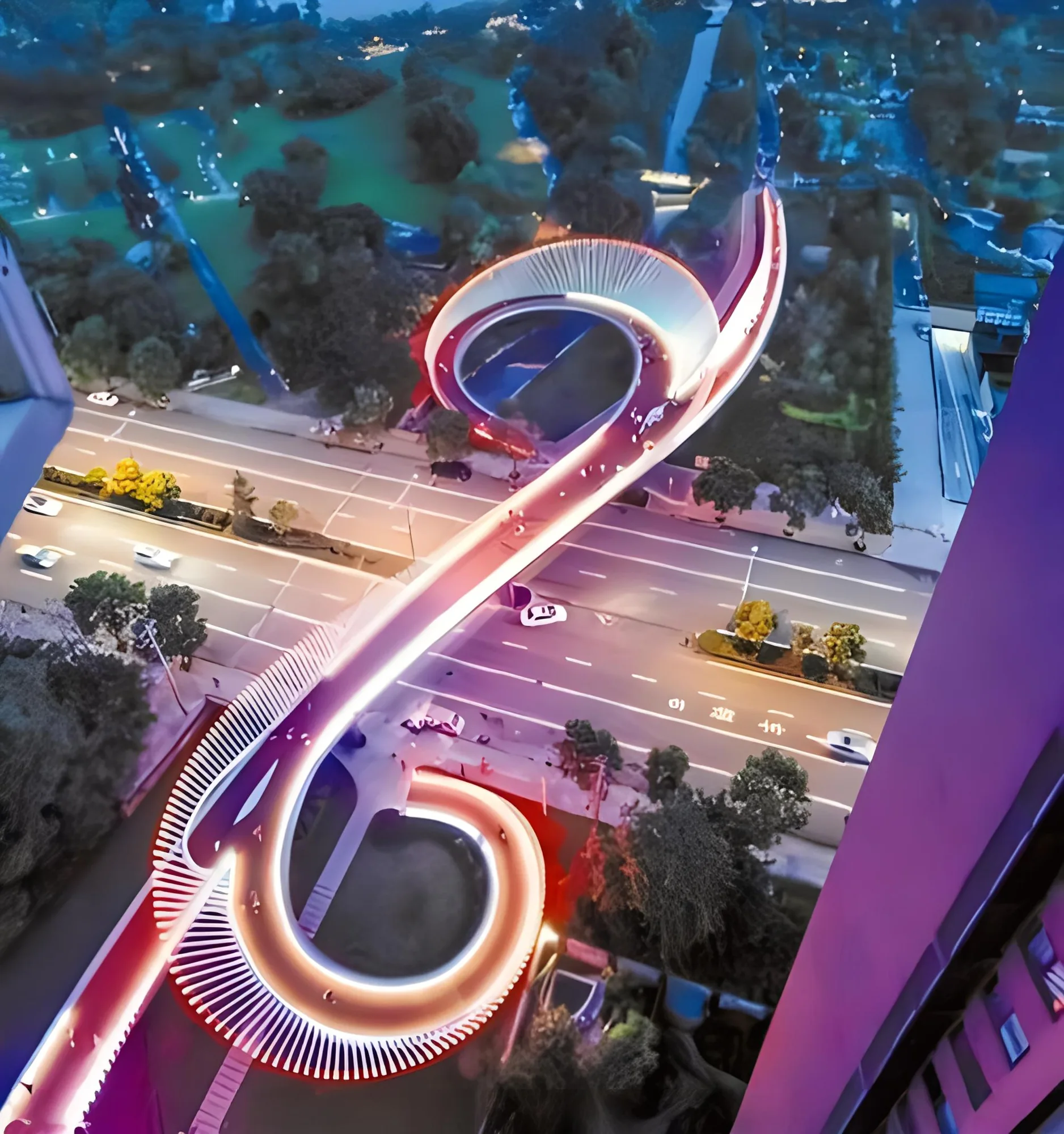
The footbridge crosses a busy urban road through sweeping ramps and elevated loops. Continuous illuminated edges follow these changes in direction, while closely spaced railing accents give the outer curves a finer rhythm. Together, they define the crossing without relying on large floodlit surfaces.
Pedestrians experience this lighting at close range, unlike the distant viewing typical of large landmark bridges. The arrangement of the edge lights, railings and warmer walkway lighting therefore matters as much as the bridge's appearance from the street.
↗Elevated view showing the linked footbridge loops
LIGHTING DESIGN CONSIDERATIONS
Curved Edge Lighting, Railing Accents and Pedestrian Comfort
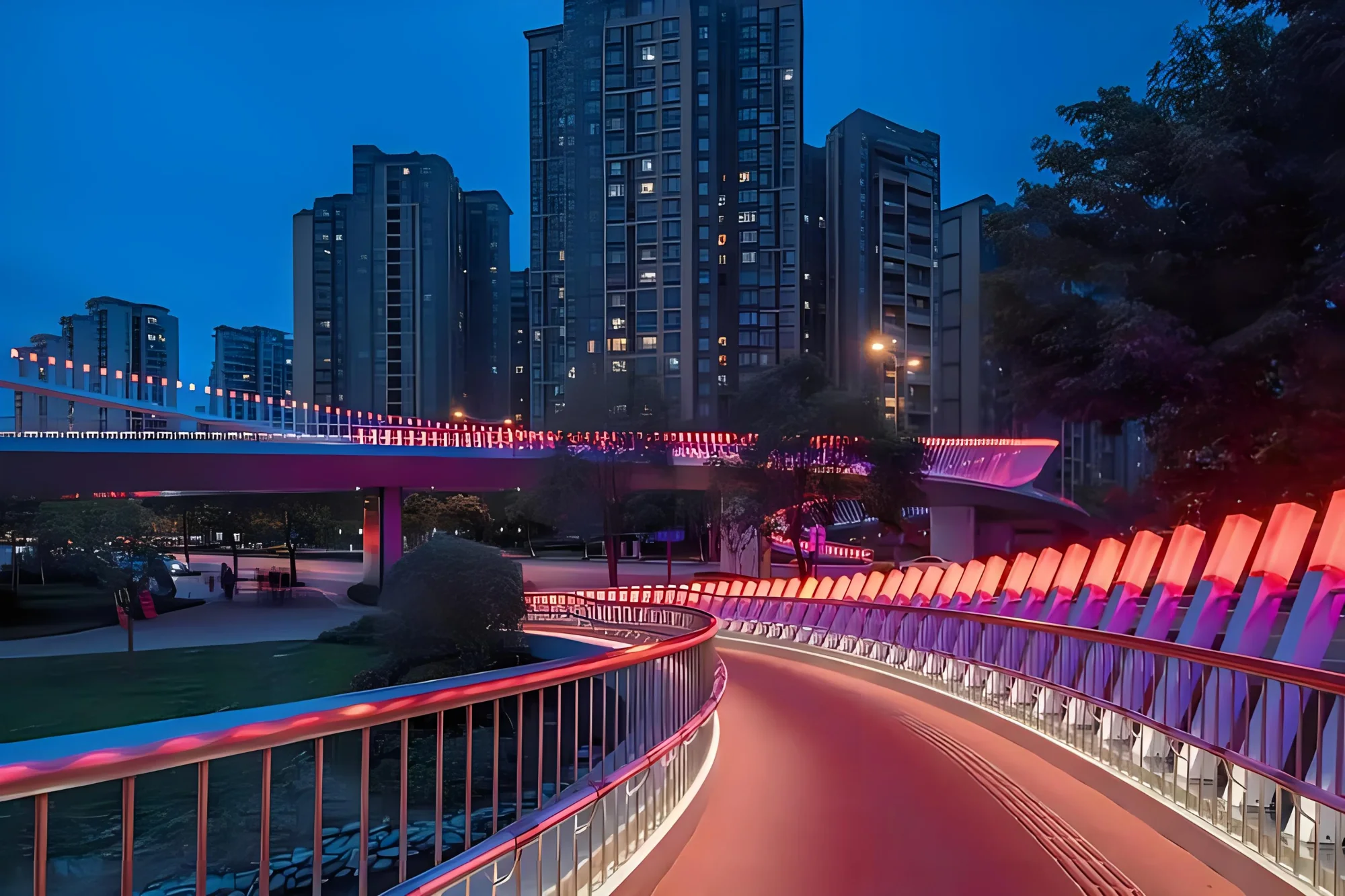
↗Railing accents and continuous edge lighting along the walkway
Maintain a Continuous Line Around the Loops
The bridge edge changes direction repeatedly, making bends and connections central to the lighting detail. Flexible LED neon can trace the curves with fewer visual breaks than rigid profiles. The mounting channel, bend radius and feed points must be coordinated with the bridge geometry.
Use Railing Accents to Define the Route
Closely spaced illuminated uprights add a separate rhythm beside the continuous edge light. Their brightness should support the overall curve rather than compete with it. Consistent spacing and concealed wiring also help keep the detail tidy when viewed from the walkway.
Protect the Pedestrian View
Decorative edge lighting is most visible at railing height, close to people's eyes. Shield direct light sources and moderate contrast through the bends. Walking-surface illumination, including ramps and access points, should be assessed independently of the bridge's architectural lighting.
Project photographs
Chengdu Tianfu 2nd Street: Looped Bridge and Walkway Views
The aerial view shows how the loops connect with the elevated span. Street-level photographs reveal the close relationship between the edge lights, railing elements and pedestrian route.
↗Street-level view of the illuminated curve and pedestrian ramp
↗Elevated view showing the linked footbridge loops↗Railing accents and continuous edge lighting along the walkway
Project views
One Continuous Route, Two Viewing Scales
From above, the illuminated loops show the bridge geometry. At pedestrian level, individual light sources, railing details and walkway brightness become more important. Both viewpoints influence the specification of a curved footbridge.
Related products
LED Neon Flex and Linear Lights for Curved Footbridges
NF01616 catalogue product
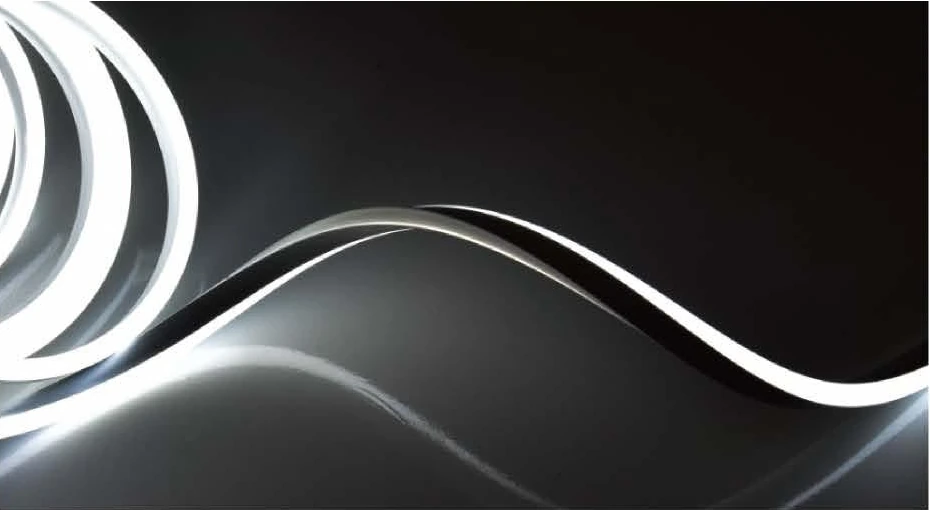
Free-Bending RGBW LED Neon Flex
Curved walkway edges and looping approaches
NF01616-RGBW offers a flexible light line for curved bridge edges. Its stated R200 mm minimum bend radius is a starting point for checking the actual bend directions, fixing channel and cable feeds. Run lengths and RGBW control equipment must be confirmed for the specified installation.
Straight railing details and repeated light segments
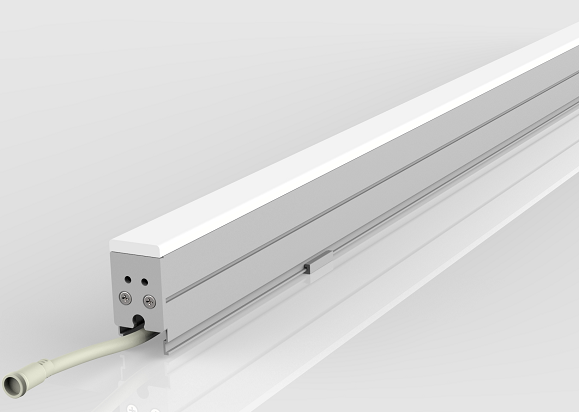
TM acrylic-cover linear lights can provide neat, repeated accents on straight railing modules. The rigid profile suits defined straight sections rather than tight curves. Fixture orientation and source visibility should be checked at pedestrian eye level before specifying the layout.
Product, installation and control questions for bridges with looping walkways and close pedestrian viewing distances.
Why use flexible LED neon on a curved pedestrian bridge?
Flexible LED neon follows changing edge geometry with fewer visible joints than a series of rigid linear fixtures. Check the bend direction and minimum radius against the approved railing profile. The NF01616-RGBW catalogue configuration lists a minimum bend radius of R200 mm.
Can RGBW bridge-edge lights be divided into different scenes?
Yes, with compatible RGBW luminaires, drivers and controllers. Separate zones can support fixed colours, dimming or programmed changes. Confirm the control protocol for the selected neon-flex configuration; RGBW light output alone does not prove DMX512 compatibility or identify the system used on this bridge.
How should power feeds be arranged along a long curved edge?
Check the permitted run length, voltage drop and driver capacity before setting feed locations. Multiple electrical sections may be required even where one uninterrupted light line is desired. Place connections and service points where they remain protected and accessible.
Does decorative handrail lighting replace walkway illumination?
No. Bridge-edge accents make the structure visible, but the deck, ramps and access points need an independent lighting assessment. Check illumination, uniformity and glare against the applicable local requirements, especially at turns and changes in level.
What should I send CRANE for a curved footbridge lighting quotation?
Share bridge plans, curve radii, railing and edge sections, approximate lighting lengths, mounting and power locations, and preferred light colours. If RGBW scenes are required, include the intended operating modes and any existing control equipment.
DISCUSS YOUR BRIDGE LIGHTING PROJECT
Plan Lighting for a Curved Pedestrian Bridge
Send CRANE your bridge layout, railing sections and curve dimensions. Include preferred light colours, approximate lengths and available power locations so we can review neon-flex and linear-light configurations for your project.