Choose DMX512 when a project centres on continuously changing, coordinated effects and the selected fixtures support the required control modes. Consider DALI-2 when individual device addressing, groups, scenes and compatible device information are important to the building’s lighting operation. Either can control compatible architectural luminaires, including colour-capable equipment; the right choice depends on the actual devices, the required behaviour and the system design.
For a mixed project, DMX and DALI can serve different lighting areas under an integrated control strategy. That requires suitable controllers or gateways, a defined interface and a commissioning plan. A protocol label alone does not guarantee colour performance, feedback, interoperability or a particular operating scene.
What each protocol is designed to do
DMX512 is a digital data transmission system used to control lighting equipment. A controller sends values over a DMX link; a fixture or decoder interprets the slots assigned to its address according to its selected mode. It is well suited to delivering many changing control values across a coordinated installation. Scene creation, scheduling and the user interface are supplied by the chosen control system.
DALI stands for Digital Addressable Lighting Interface. The IEC 62386 series defines digital lighting control components and communication. DALI-2 is the DALI Alliance’s updated certification programme and ecosystem, covering compatible control gear as well as control devices such as application controllers and input devices. A DALI system can address compatible gear and use groups and scenes; available feedback and other functions depend on the actual devices and application controller.
The two names describe different control approaches. They do not define the light source, optical distribution, fixture output or a universal level of colour quality.
Compare the decisions that affect the project
| Decision | DMX512 | DALI-2 | What the specifier must check |
|---|---|---|---|
| Typical priority | Coordinated, frequently changing values and effects | Addressable devices, groups, scenes and compatible building-lighting controls | Scene behaviour, change speed and day-to-day operation |
| Capacity | Up to 512 data slots in a universe | Up to 64 control-gear and 64 control-device addresses per subnet | Actual fixture mode or gear count, controller ports, bus power and reserves |
| Colour | Supported by compatible fixtures and channel modes | Supported by compatible colour-control gear and controllers, including applicable DT8 colour types | Actual colour method, fixture configuration and controller support |
| Feedback | Basic DMX is primarily one-way; RDM is separate and requires compatibility | Queries and feedback are possible for supported devices and functions | Which status data and commands the whole system actually exposes |
| Physical signal wiring | Typically a daisy chain, terminated at the segment end; active splitters for branches | Flexible wiring arrangements on a powered two-wire bus, subject to system limits | Manufacturer instructions, cable route, loading and installation requirements |
| Integration | Requires a compatible controller or gateway to other systems | Requires a compatible application controller or gateway to other systems | Command mapping, ownership, fallback behaviour and commissioning |
The numbers in the capacity row measure different things. A DMX slot usually represents one control value; a DALI control-gear address identifies a device or logical gear instance. Neither number alone says how many luminaires can be independently controlled in a given project.
Is DMX the only choice for colour-changing lighting?
No. DMX is commonly considered for complex, continuously changing facade effects because compatible controllers can distribute many values together. The overall performance depends on the controller, universe allocation, fixture modes and installation.
DALI colour-control gear defined by IEC 62386 Part 209 is commonly called DT8. Depending on the supported colour type, compatible gear can provide tunable-white control, RGBWAF colour control or xy colour control. A controller and application must support the relevant functions; a generic DALI label does not establish which colour type is available.
DALI can recall coordinated scenes, but suitability for a particular animated effect must be assessed against the required speed, synchronization and device behaviour. Test the intended scenes with the proposed controller and fixtures rather than assuming that every DALI system behaves like a DMX show controller—or that DALI cannot operate coloured light.
Understand feedback and device management
Basic DMX512 transmits control data from a source to receivers. Remote Device Management (RDM) is a separate related protocol that can support two-way device-management functions where the controller, fixtures and intervening distribution equipment support them. A DMX label alone does not prove RDM capability or any particular status report.
DALI supports two-way communication with compatible equipment, but monitoring is not automatic merely because a driver is labelled DALI. Identify the information the project requires, such as a supported fault indication, and verify that the device exposes it and that the controller or gateway collects and presents it. DALI-2 certification is a useful interoperability reference; check the product database and supported parts for the exact device rather than assuming all functions are implemented.
Compare capacity using the actual configuration
For DMX, total the channel footprint of each independent fixture or control group in its selected mode. A fixture can require more slots than the number of its colour emitters; shared addresses reduce independent control. Physical segment loading and wiring are separate from the universe’s channel budget.
For DALI-2, count the addressable control gear and control devices on each subnet separately. One luminaire may contain more than one piece of addressable gear, while a colour-control gear’s capabilities are not necessarily equivalent to separate DMX slots. Confirm the address allocation, bus power budget and device-specific limits with the system supplier.
Hypothetical project comparison
Assume a facade needs 30 independent RGBW fixtures with programmed colour effects. A proposed DMX fixture mode is documented to consume four slots per fixture. The initial channel requirement would be 30 × 4 = 120 slots, before any other equipment or reserved capacity. This is a hypothetical mode and calculation, not a CRANE specification or a physical-line capacity assessment.
Now assume an alternative uses 30 addressable colour-control gear instances, each confirmed by its manufacturer to operate the intended luminaire and support the required DALI colour method. The address count is 30 gear addresses on a DALI-2 subnet; the controller, bus power, control devices and scene behaviour still require separate checks. It is not a conversion of 120 DMX slots into 30 DALI addresses.
Compare both proposals against the required motion, appearance, operator interface and maintenance data. If the DALI proposal cannot demonstrate a required fast effect, evaluate a DMX solution or a revised brief. If the DMX proposal lacks required status reporting, assess compatible RDM or another monitoring solution. Do not make either decision on the headline capacity numbers alone.
Plan wiring and integration early
DMX data segments normally follow a daisy-chain arrangement. Use compatible active distribution equipment for branches and follow the manufacturer and system designer’s instructions for cable, termination, isolation and segment loading. A splitter can distribute the same universe onto multiple branches; it does not create new independent slots by itself. Signal wiring and luminaire power are separate design questions.
A DALI-2 wired subnet uses a bus for control data and bus power, with a suitable bus power supply. The DALI Alliance describes flexible wiring topology, subject to cable and system limits. Its published 300 m recommendation concerns the distance between the farthest devices under stated cable and power conditions; total branched cable is a different quantity. Follow the equipment instructions and applicable installation rules, including separation and electrical safety requirements.
When a project combines both systems, draw a boundary showing which controller owns each group and which commands pass through any gateway. Verify supported direction, scene mapping, status reporting, change speed, startup and signal-loss behaviour. A gateway does not automatically translate every feature or preserve the performance of the source protocol.
Select and commission the system in five steps
- Document scenes and operation. List everyday lighting, event effects, schedules, occupant or operator actions and fallback states.
- Define independent control. Identify each fixture or gear group, required colour method and the information that operators need to monitor.
- Check equipment. Obtain exact fixture modes, channel charts, DALI device parts and supported functions, controller capabilities, wiring instructions and compatible interfaces.
- Prepare a capacity and interface schedule. Record DMX universes and slot ranges or DALI gear and control-device addresses, bus supplies, branches and any gateways. Include physical routes and spare capacity appropriate to the brief.
- Test a representative system. Verify colour scenes, group changes, any required feedback, gateway behaviour, loss of control and restart using the actual configuration. Record settings and deliver an as-built address schedule and control-program backup where supported.
This process also exposes cases where neither proposal is complete. For example, a protocol may support a function in principle while the selected driver or controller does not. Resolve that mismatch before procurement rather than relying on the protocol name.
Review a CRANE wall-washer candidate
The CRANE LM 66 Multi-Row LED Wall Washer page lists DMX512 and DALI among its control options. It is a candidate to review where a linear wall washer fits the facade and mounting arrangement.
Confirm which control option is available for the exact model, light-colour configuration and driver. Request the DMX channel map or DALI device documentation, compatible controller requirements, wiring instructions and any independent certification evidence needed by the project. The page’s option list alone does not establish DALI-2 certification, DT8 colour control, RDM or simultaneous operation of both protocols.
Frequently asked questions
Does DMX512 require a special controller for everyday scheduled operation?
The project needs equipment that can play the required scenes and schedule them. That may be an architectural controller or a compatible system with a DMX output. Verify the actual scheduling, timekeeping and recovery features; they are not supplied by the DMX data format itself.
Does a DALI-compatible driver guarantee DALI-2 certification?
No. Check the exact device and its listed certification and supported parts in the DALI Alliance product database. A luminaire may use a certified component without the complete luminaire itself being a separately certified control device.
Can one DMX universe be sent down several cable branches?
Yes, with a suitable active splitter or distribution system. The branches can carry the same universe, so the address plan must specify whether receivers on different branches act together or independently.
Can a project change DALI groups after installation?
Compatible systems generally allow group assignments to be configured without moving power wiring. The actual process and access rights depend on the controller and commissioning software; obtain and retain the configuration at handover.
Does choosing either protocol determine colour rendering or beam angle?
No. Those depend on the luminaire and its configuration. Review the light-source, optical and photometric data separately from the control interface.
What happens after a controller or gateway loses power?
The result depends on the actual controller, gateway, driver and their settings. Specify the desired failure and restart behaviour, then test it during commissioning rather than assuming a default for the whole protocol.

Ethan Lee
Product Selection
Explore Related Lighting Products
Compare product families by the lighting effect, mounting position and architectural detail you need to achieve.
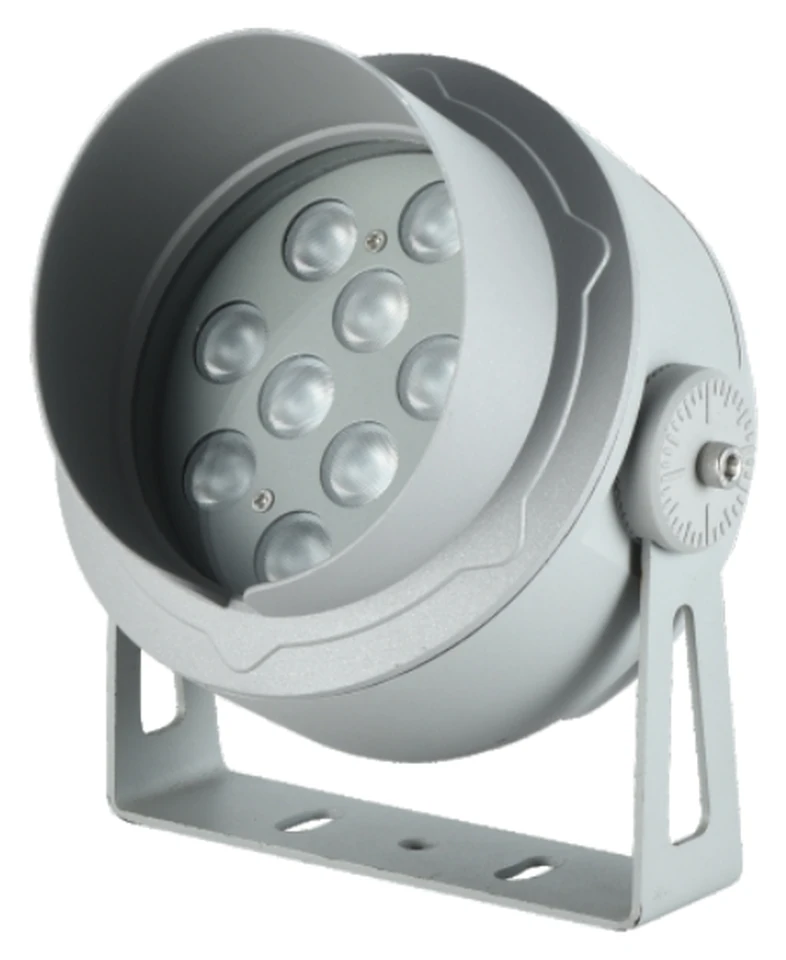
LED Flood Lights
Architectural LED flood lights for facades, landmarks, landscapes and outdoor lighting projects.
Browse Flood Lights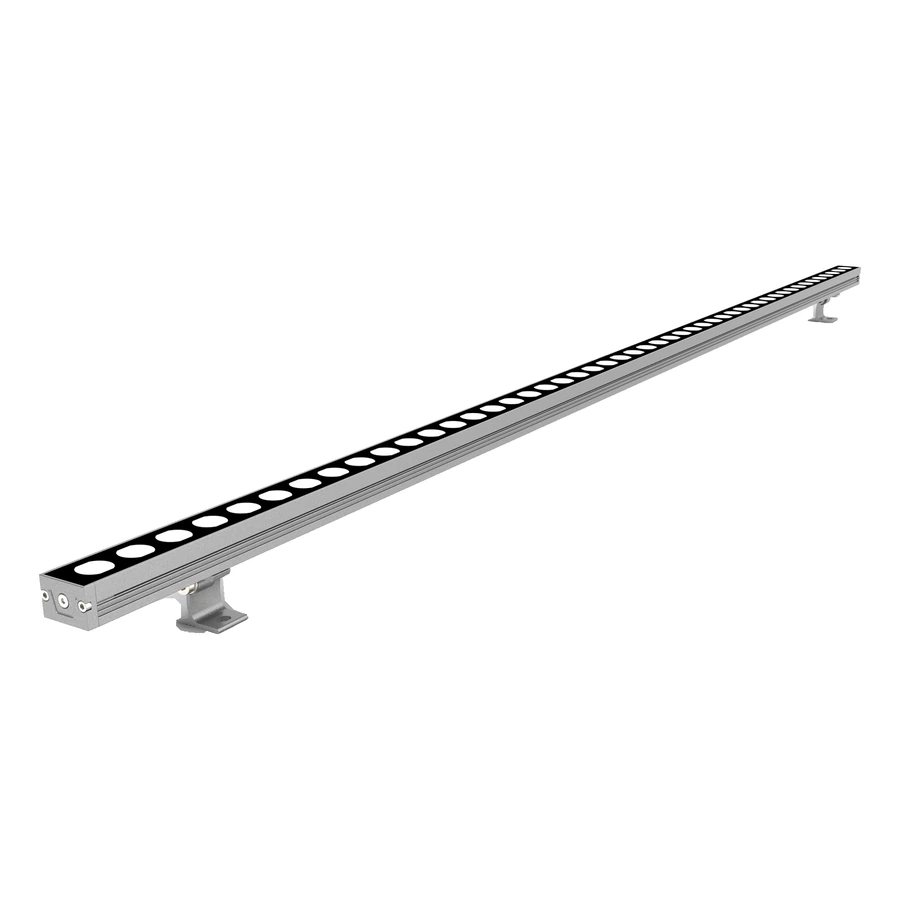
LED Wall Washer Lights
Architectural wall washer lighting for building facades, vertical surfaces and outdoor structures.
Browse Wall Washer Lights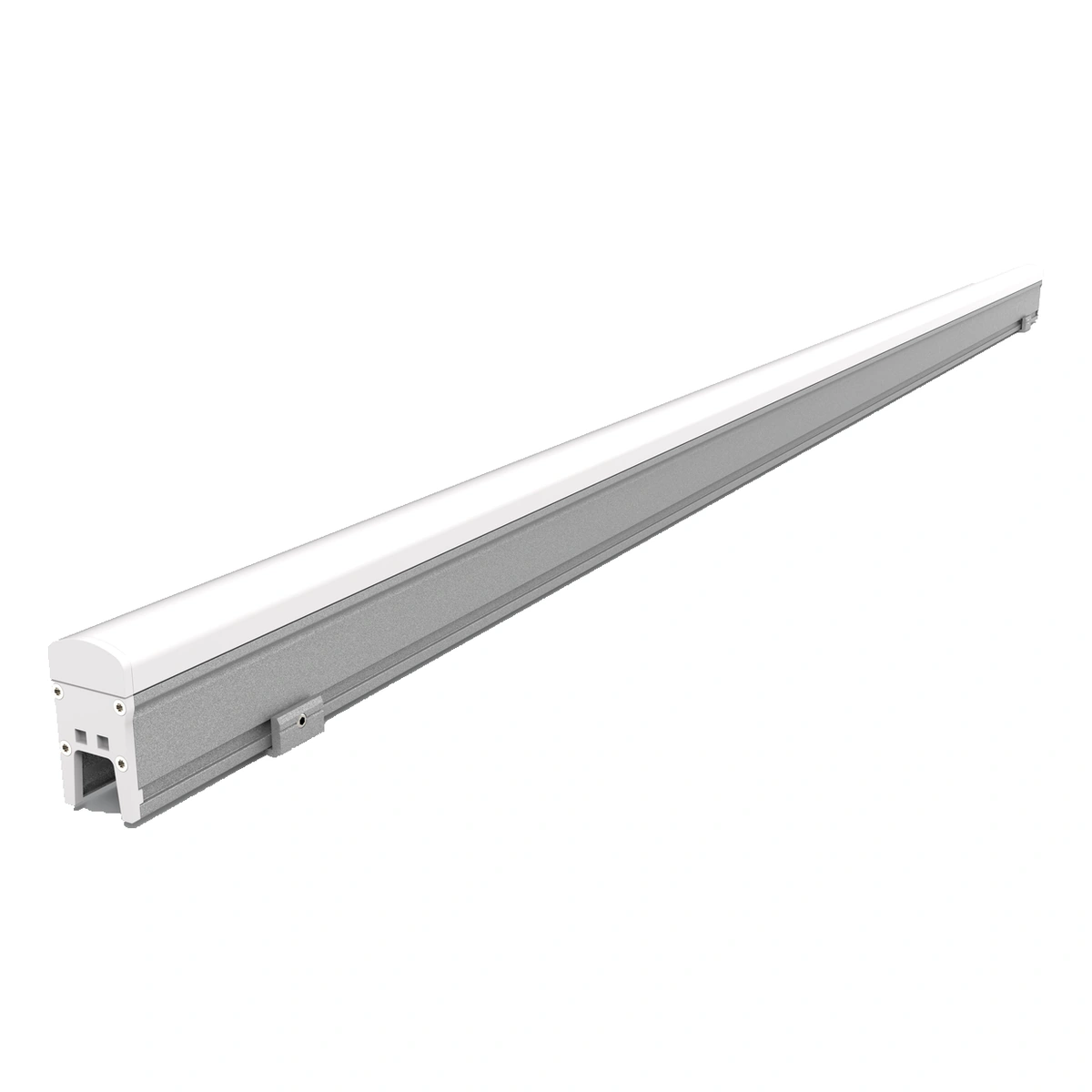
LED Linear Lights
Architectural LED linear lights with model-specific PC covers, glass faces or aluminium aperture-style profiles.
Browse Linear LightsProject Inquiry
Discuss Your Facade Lighting Project
Tell us about your facade, desired lighting effect and project requirements.